
Parker Roadside Assistance Built for Altitude and Seasonal Extremes
Activate Towing provides roadside assistance across Parker's expanding suburban corridors and high-altitude routes where temperature swings from 4°F to 93°F create battery failures and tire blowouts year-round. Our GPS-tracked dispatch, CCA battery testing, and MUTCD-compliant scene safety reduce stranded time and prevent secondary incidents.
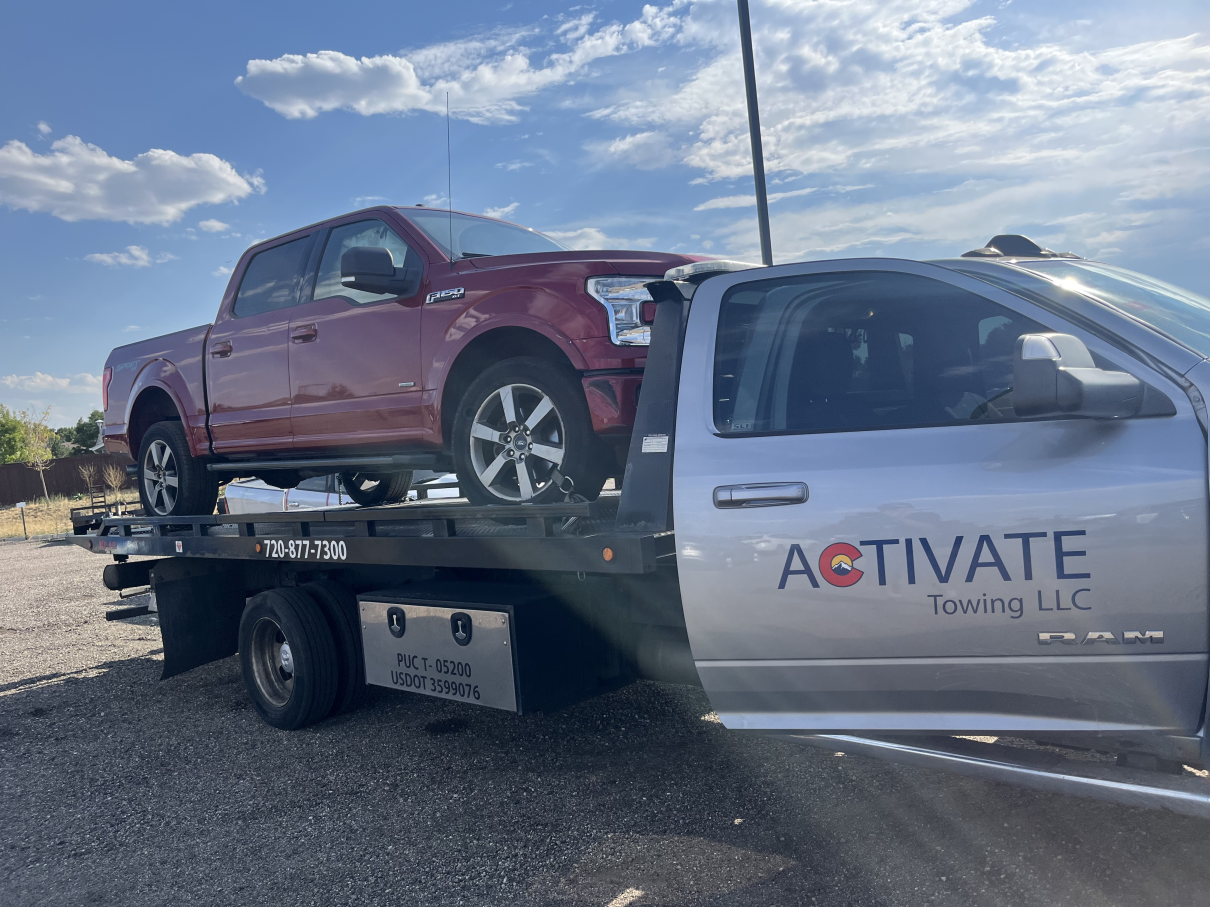
Trusted by drivers across Douglas County
Live reviews straight from Google.
Flat-rate roadside service. No per-minute games in Parker, CO.
We tell you the number on the phone. You pay that number on site. That's it.
Non-destructive entry. Back behind the wheel in minutes.
Up to 2 gallons delivered. Pay actual fuel cost at pump price.
Mud, ditch, snowbank, soft shoulder. Quoted to your exact situation.
Quote confirmed on the call. Pay on site.
Lock in your quote. 720-877-7300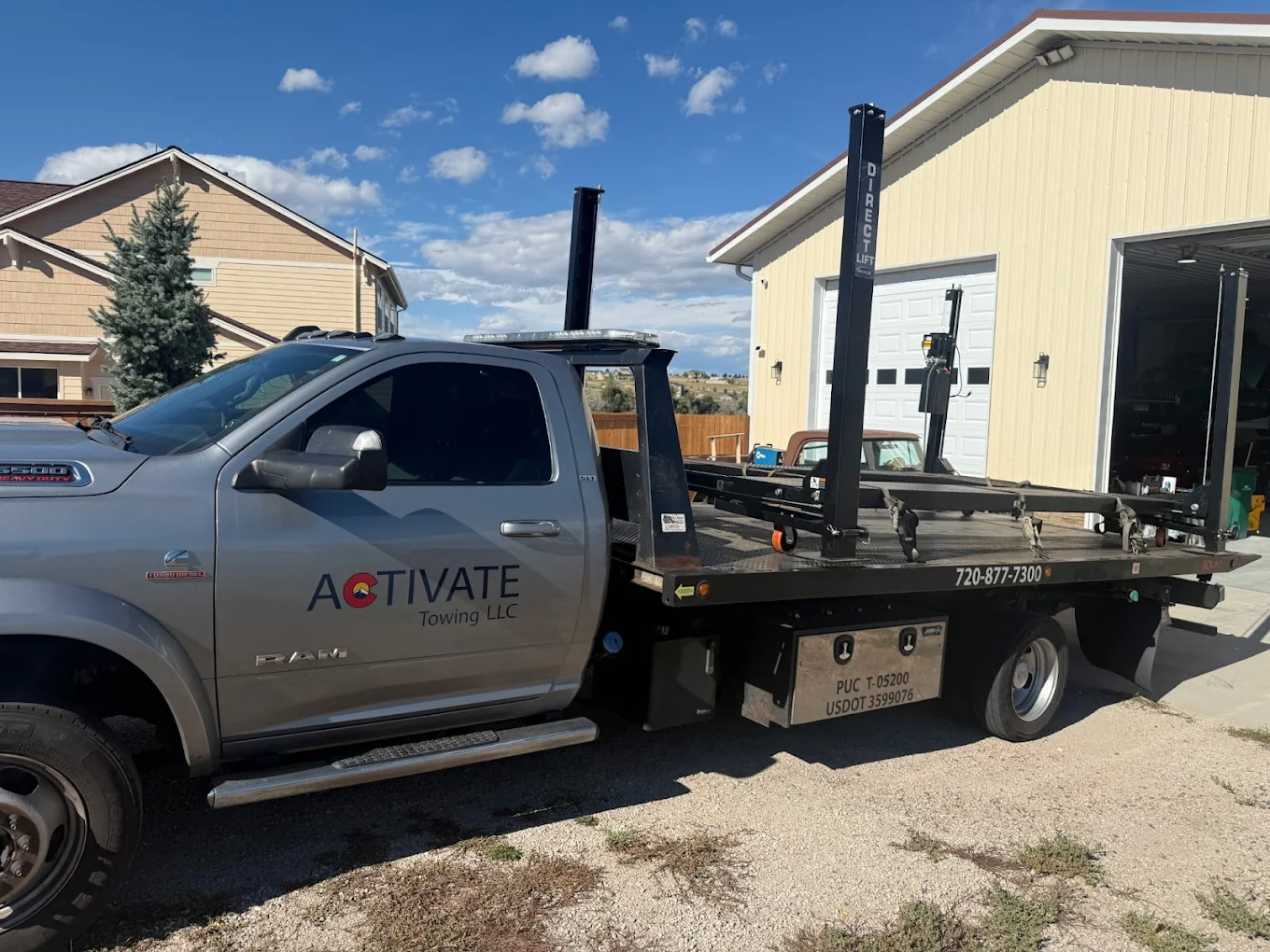
What Defines the Best Emergency Response for Your Vehicle
Most drivers assume a jump-start is a jump-start. It's not. Parker's 5,900-foot elevation and January lows near 4°F collapse battery voltage faster than sea-level markets, and a blind jump without testing can fry alternators or onboard electronics. We test open-circuit voltage and cold-cranking amps before connecting anything.
Four Capabilities That Separate Competent Response from Guesswork
- CCA and OCV Testing: Digital multimeter confirms battery health before any jump attempt.
- MUTCD Scene Safety: Cones, LED flares, and high-visibility PPE per Part 6 standards.
- GPS-Tracked Dispatch: Live ETA and SMS updates so you know arrival time.
- OEM Jack Points: Tire changes at manufacturer-specified lift points prevent frame damage.
We carry lithium jump packs rated for high peak amps and surge protection, which matters when ambient temperature drops below 10°F and battery internal resistance spikes. That said, if your battery tests below 9 volts open-circuit, a jump won't hold, you're looking at a tow to a shop, not a roadside fix.
Core Services We Deliver Across Douglas County
Parker's road network includes long, unlit corridors like Parker Road and Lincoln Avenue where a dead battery at 11 p.m. means no streetlights and sparse traffic. We dispatch based on symptom, vehicle type, and location so the truck that arrives can complete the job.
Battery Jump-Start with Post-Start Alternator Check
We test voltage under load, jump with surge-protected boosters, then verify alternator output after start to confirm charging system function. If the alternator isn't putting out 13.5–14.5 volts, we tell you before you drive off and stall two miles later. Our battery jump service includes full electrical system diagnostics.
Flat Tire Change Using Torque-Spec Reinstallation
Wheel chocks, OEM jack points, lug removal, spare installation, and torque wrench re-install to manufacturer spec. We also check TPMS warnings and inflate to the PSI on your door jamb sticker, not a guess. Every tire change we perform follows factory torque specifications.
Lockout Service with Air Wedges and Long-Reach Tools
Non-destructive entry using air wedges to create door gap and long-reach tools to manipulate interior handles. We avoid airbag curtain zones and verify customer ID before unlocking to prevent liability issues. Our vehicle lockout specialists handle modern security systems without damage.
Fuel Delivery in DOT-Approved Containers
We bring gasoline or diesel in Justrite safety cans with spill-prevention spouts. Anti-siphon fuel necks on newer vehicles mean we pour, not pump, and we carry absorbent pads for any drips on asphalt.
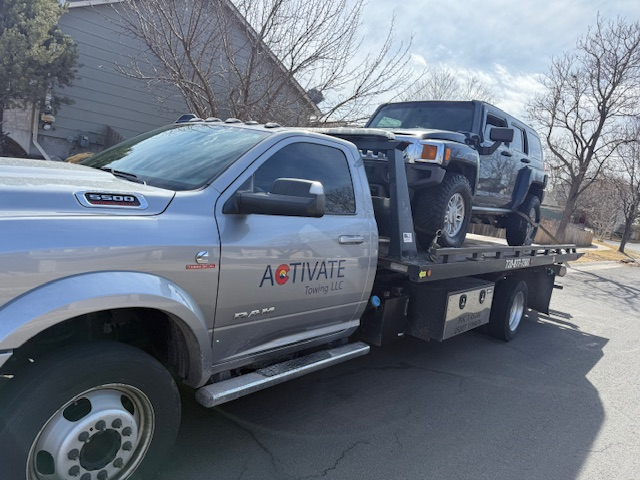
Building a Trusted Network for Reliability
You just realized your phone's at 8 percent, it's 22°F outside, and you're stuck in a Stonegate parking lot with a dead battery. The last thing you want is a dispatcher who can't give you a real ETA or a tech who shows up without the right equipment. Our complete roadside assistance network ensures the right truck arrives with the right tools.
What Makes Response Predictable Instead of Chaotic
- Towbook Dispatch Platform: GPS/AVL tracking logs ETA, on-scene time, and service completion in real time.
- Pre-Arrival Safety Instructions: Dispatcher confirms your location and advises on hazard lights and safe positioning.
- Photo Documentation: Pre- and post-service images capture vehicle condition and completed work.
- Motor Club Integration: We process AAA, Allstate, and Geico roadside claims without upfront payment.
Our techs carry Miller Industries wheel-lift assemblies and Warn winches rated for 8,000-pound pulls, which covers most passenger vehicles and light SUVs. We had a roadside call last January where a driver insisted on a jump after we measured 8.2 volts open-circuit, the alternator burned out three miles down Parker Road because the dead cell drew full field current the entire time.
How Does Emergency Service Work When You Need It Most?
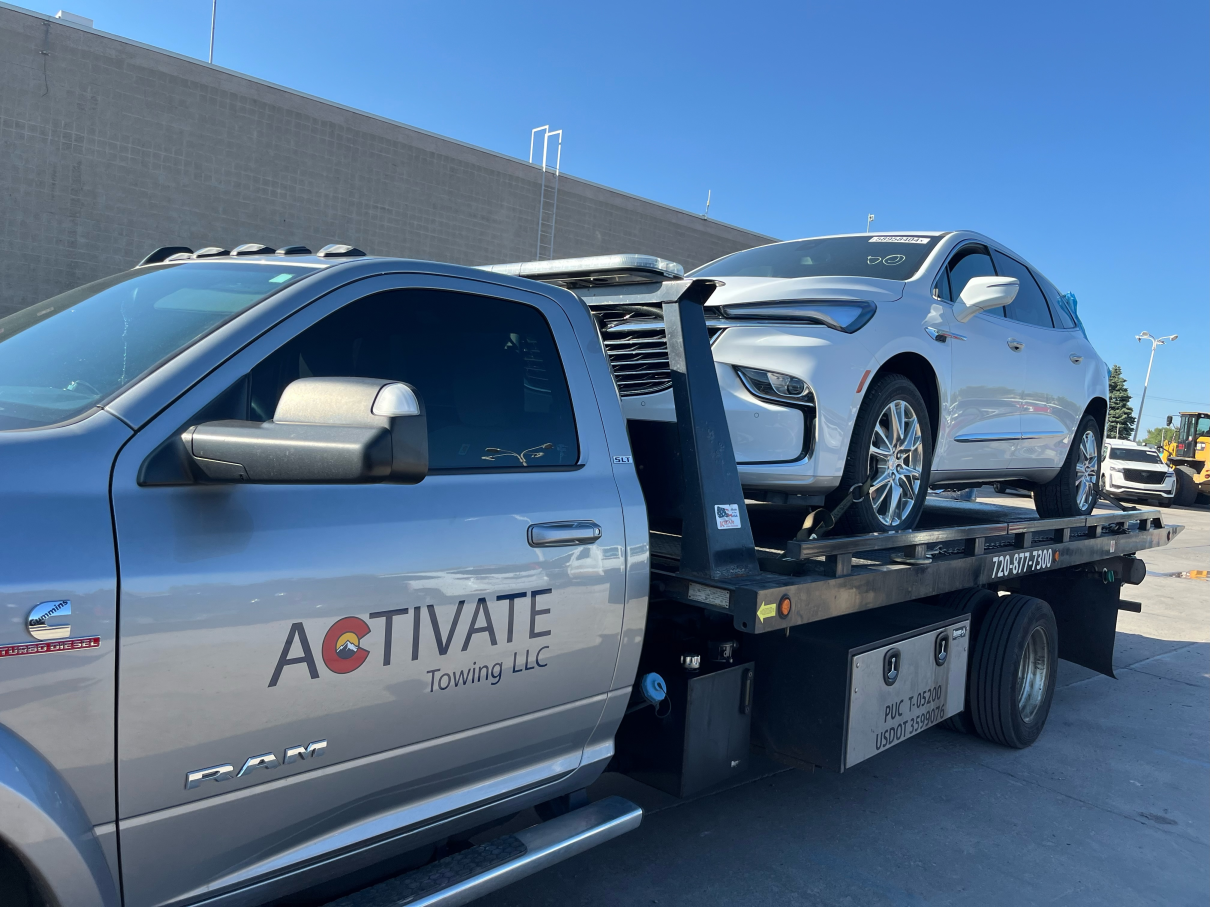
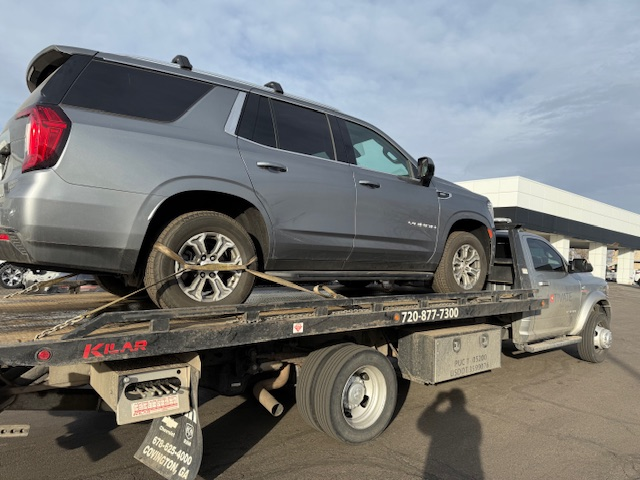
When your vehicle won't start or you're stranded, the process is straightforward: call, confirm location, wait for arrival. No guessing, no vague windows, dispatch logs your GPS coordinates or intersection, calculates drive time from active truck positions, and sends an SMS with ETA and driver name. The tech assesses scene safety on arrival, cones deploy first if you're on a shoulder, then moves to diagnostics. For situations requiring transport, our flatbed towing service protects drivetrain and suspension components.
Step-by-Step Workflow from Dispatch to Clear
- Triage and Equipment Routing: Dispatcher codes the call type so the right truck rolls first time.
- On-Scene Hazard Assessment: Tech evaluates traffic, lighting, and vehicle position before starting work.
- Service Decision Tree: Battery test, tire inspection, or lockout attempt determines fix-on-scene versus tow.
If you're on E-470 or I-25, we coordinate with Colorado State Patrol for lane closures when safe pull-off isn't available. Winter adds complexity: frozen door locks need heat, not force, and jump-start attempts below zero require longer dwell time for the booster to warm the electrolyte. Honestly, if your battery is more than four years old and it's below 15°F, a jump might get you home but you're buying a new battery within the week.
Serving Parker and Surrounding Areas
Activate Towing serves residents and businesses throughout Parker and the surrounding Douglas County area. Our trucks regularly work calls in Lone Tree, Castle Pines, and the Ponderosa and Stonegate neighborhoods where newer developments stretch service response times. We schedule around your availability, including early mornings and late evenings when most shops are closed.
Service Area
- Our team covers the Parker Road corridor from Lincoln Avenue south to Castle Rock.
- Clients near the Dry Creek Business Park and Denver Tech Center rely on us for fleet support.
- Full coverage across the greater Parker metro and unincorporated Douglas County.
We dispatch across Parker's expanding suburban grid and offer flexible arrival windows to match your schedule.
Frequently Asked Questions
What happens if roadside assistance arrives and the problem can't be fixed on the spot?+
When a repair exceeds what can be done roadside, the service transitions to towing your vehicle to a repair facility. The outcome depends on whether your coverage includes towing distance limits and whether you've pre-selected a destination shop.
Not every breakdown can be solved with jumper cables or a tire change. If the technician determines your vehicle needs shop-level diagnostics or parts replacement, they'll shift to transport mode and load your car onto a flatbed or wheel-lift. You'll need to specify where it goes (your mechanic, a dealership, or your driveway), and some service plans cap towing distance at five or ten miles before charging per-mile overages. If you're unsure where to go and it's after hours, many drivers can suggest reputable local shops, though they can't diagnose the underlying issue on scene.
What makes Activate Towing's roadside assistance response different for Parker drivers?+
Activate Towing dispatches equipped service vehicles directly to your location with diagnostic tools and common repair parts onboard. Response effectiveness depends on accurate vehicle location sharing and clear problem description when you call.
Activate Towing operates with fully stocked roadside units rather than bare minimum tow trucks that only haul vehicles away. Each service vehicle carries jump packs, tire changing equipment, lockout tools, and fuel delivery systems so technicians can resolve most breakdowns without towing. One thing that catches drivers off guard is how much faster problems get solved when you describe symptoms accurately over the phone instead of just saying the car won't start. A dead battery presents differently than a seized alternator, and knowing which tools to grab before arriving cuts resolution time substantially. Parker's mix of highway corridors and residential streets means technicians route based on your exact coordinates, not just an intersection or landmark.
When your vehicle stops cooperating on Parker Road or in a neighborhood off Mainstreet, call Activate Towing with your precise location and what happened right before the breakdown. That detail lets the responding technician bring the right equipment and often means you're back on the road without needing a tow at all.
What should you do if your vehicle breaks down in an area where multiple roadside assistance providers operate?+
Call the provider with the fastest documented response time to your exact location, not the nearest city listed in their service area. Coverage radius matters less than actual dispatch logistics and current unit availability.
The instinct when stranded is to search for the closest provider by headquarters address, but that metric tells you almost nothing about how quickly help will arrive. What actually determines response speed is whether the company has a mobile unit already working in your quadrant, how their dispatch routing works, and whether they prioritize calls by geography or queue order. A provider based fifteen miles away with real-time GPS dispatch can often beat a competitor whose office is three miles closer but relies on manual callback systems.
What Actually Controls How Fast Help Reaches You:
- Active Unit Location: A truck finishing a jumpstart two exits north of you will arrive faster than one leaving a shop across town, regardless of company headquarters.
- Dispatch Method: GPS-coordinated systems route the nearest available unit automatically, while callback queues can add ten to twenty minutes before a driver even starts moving.
- Service Density: Providers running multiple simultaneous calls in your area tend to have shorter gaps between availability, especially during evening rush periods.
- Transparent ETA Policy: Companies that give you an honest arrival window upfront, rather than vague reassurances, usually have tighter operational control and fewer surprises.
One pattern we've noticed after hundreds of roadside calls is that the providers who ask for your precise cross streets or GPS coordinates during the initial call, rather than just your general area, almost always show up closer to their quoted time. If you're stuck on a highway shoulder or in an unfamiliar part of Parker and need reliable help without the guessing game, reach out to a service that tracks units in real time and can confirm which truck is being sent your way.
How does Activate Towing handle roadside assistance calls when weather conditions make Parker roads hazardous?+
Activate Towing dispatches equipped trucks during hazardous weather with priority routing based on safety risk and vehicle location. Response adjusts when ice, snow, or flooding limits safe access to certain Parker roads.
Activate Towing operates through severe weather by dispatching trucks equipped for low-traction conditions and adjusting route plans when certain Parker roads become temporarily inaccessible. Drivers assess whether a jump-start, tire change, or fuel delivery can be completed safely on-site, or if conditions require towing the vehicle to a protected location first. One thing we've learned after years of winter calls is that attempting a battery service on an icy shoulder often creates more risk than simply loading the vehicle and working in a safer spot. If your car is stranded during a Parker storm and road conditions are deteriorating, call Activate Towing so we can route the closest available truck and keep you updated on realistic arrival windows.
What roadside assistance services are included beyond basic tire changes and jump-starts?+
Comprehensive roadside assistance covers lockout entry, fuel delivery, winch-out recovery, and minor mechanical diagnostics in addition to battery and tire work. Service scope depends on vehicle accessibility and whether specialized equipment is required on-site.
After running through dozens of these calls, the pattern is clear: most drivers assume roadside assistance stops at batteries and flats. It doesn't. Professional providers handle lockouts using non-destructive entry tools, deliver emergency fuel when you've miscalculated your range, and deploy winches to extract vehicles from ditches or soft shoulders. Some technicians carry diagnostic scanners to identify why a check engine light triggered or why the transmission won't shift out of park. The limitation comes down to what's fixable without a lift. If the alternator needs replacement or the transmission requires internal work, the vehicle gets towed to a shop. But stuck keys, empty tanks, and vehicles nosed into snowbanks. Those get resolved without leaving the roadside.
If your situation involves something beyond a flat or dead battery, describe the full scenario when you call. Dispatchers route trucks based on equipment needs, and sending the right rig the first time keeps you from waiting through a second response cycle.
Related Parker, CO service pages.
Stranded in Parker? Get Help from a GPS-Tracked Truck Now
You're stuck, your phone battery is dropping, and you need someone who arrives when they say they will. Our dispatch confirms your location, texts you a real ETA, and sends a truck with the right equipment the first time. No guessing, no three-hour windows. Call now or text your GPS pin.