Castle Rock Roadside Assistance for I-25 and Mountain Corridor Drivers
Activate Towing provides roadside assistance across Castle Rock with GPS-verified dispatch, MUTCD-compliant traffic control, and EV-safe handling protocols. Licensed under Colorado PUC regulations, we deliver transparent pricing and documented service for insurance and motor club reimbursement.
Trusted by drivers across Douglas County
Live reviews straight from Google.
Flat-rate roadside service. No per-minute games in Castle Rock, CO.
We tell you the number on the phone. You pay that number on site. That's it.
Non-destructive entry. Back behind the wheel in minutes.
Up to 2 gallons delivered. Pay actual fuel cost at pump price.
Mud, ditch, snowbank, soft shoulder. Quoted to your exact situation.
Quote confirmed on the call. Pay on site.
Lock in your quote. 720-877-7300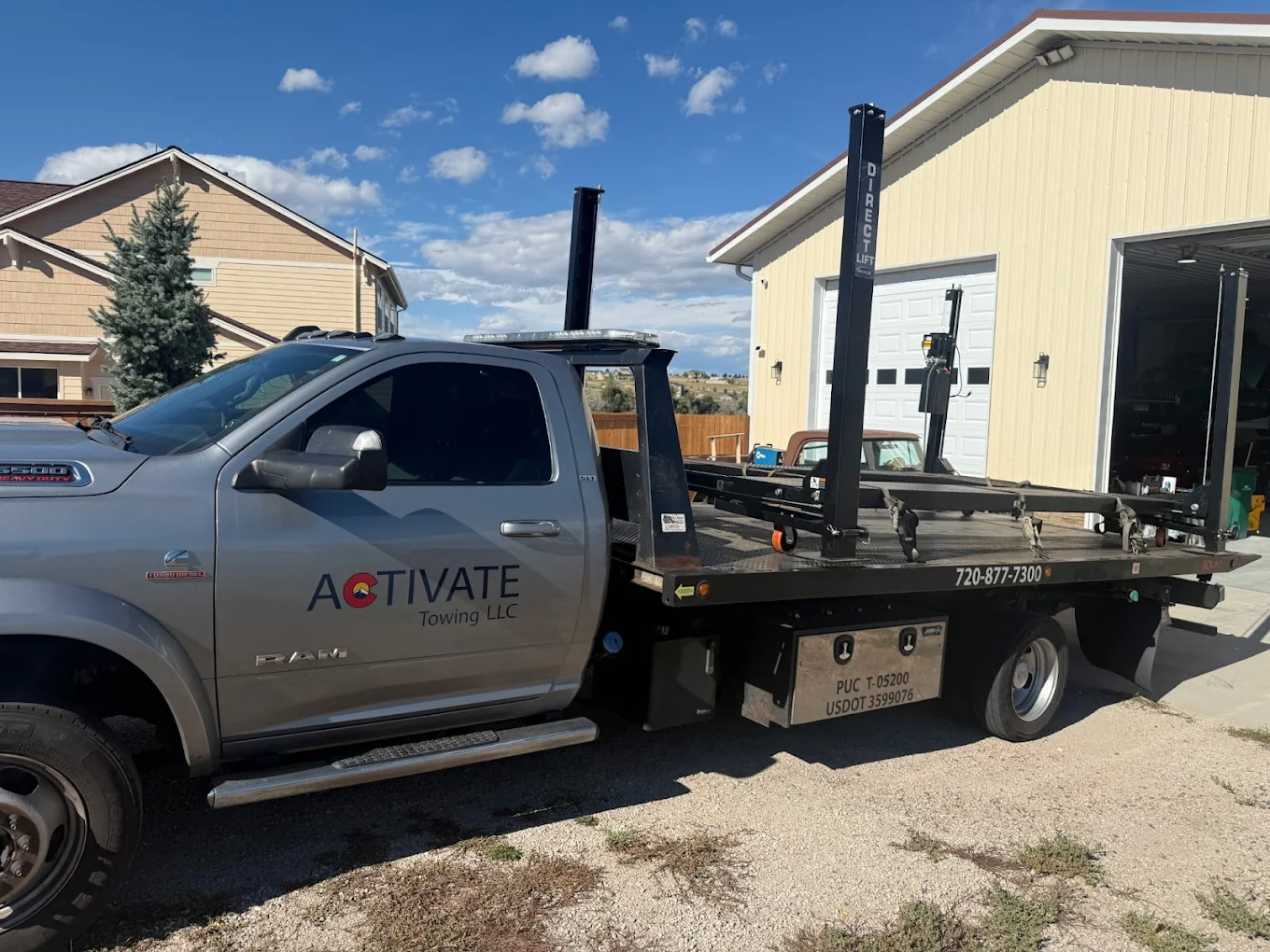
Best Roadside Assistance Options for Drivers
Most roadside calls in this corridor come from dead batteries after cold snaps, flat tires on I-25, or lockouts in parking lots. The honest answer is that response time depends on where you are: downtown Castle Rock sees faster arrivals than rural stretches along US-85. We route based on real-time traffic and shoulder conditions, not wishful estimates.
What Sets Our Service Apart
- GPS Geolocation Validation: We confirm your exact coordinates before dispatch to avoid delays.
- MUTCD Traffic Control Setup: LED beacons, cones, and reflective triangles protect you and passing traffic.
- EV Transport Mode Activation: We engage OEM protocols for Tesla, Rivian, and AWD vehicles.
- Motor Club Reimbursement Coding: Digital receipts formatted for AAA and insurance claim submission.
We quote the full price before dispatch, including after-hours surcharges and mileage beyond the first five miles. One pattern we see: clients assume a jumpstart will fix a battery that's been weak for weeks, then call back two days later when it dies again in a parking garage. If the terminals are corroded or the case is swollen, we'll tell you before we hook up cables.
Castle Rock Emergency Roadside Services
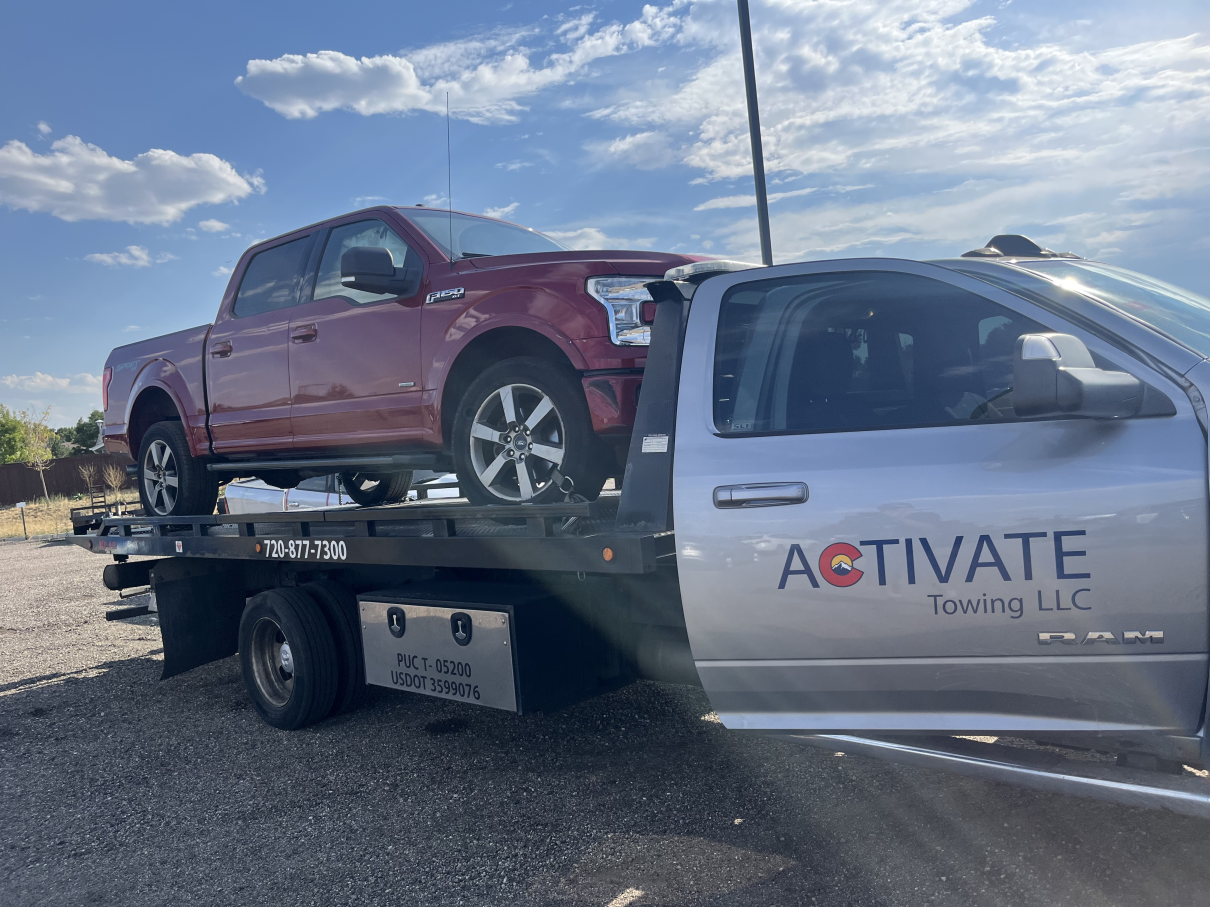
Roadside emergencies in Castle Rock range from dead batteries after overnight freezes to flat tires on I-25 and vehicles stuck in snow-covered pull-offs. We carry lithium jump packs, air wedges, torque wrenches, and synthetic winch rope to handle the most common failures without towing.
Battery Jumpstart and Electrical Diagnostics
We test voltage before and after the jump, check alternator output, and flag weak batteries that won't survive another cold night. AGM and flooded lead-acid cells require different jumpstart procedures .
Lockout Service with Airbag Protection
Air wedges and long-reach tools access door linkages without triggering side-curtain airbags. We document pre-existing damage and avoid paint-scraping techniques that cheaper operators use when unlocking vehicle doors .
Flat Tire Change to OEM Torque Specs
We lift at factory points, torque lugs in a star pattern to spec, and check TPMS sensor alignment. Hub-centric rings and wheel studs are inspected for thread damage before reinstalling during every roadside tire change .
Fuel Delivery and DEF Contamination Prevention
We verify fuel type before delivery to avoid diesel-in-gas or DEF-in-diesel contamination. No-spill containers meet EPA small-quantity transport rules, and we carry absorbent pads for roadside spills.
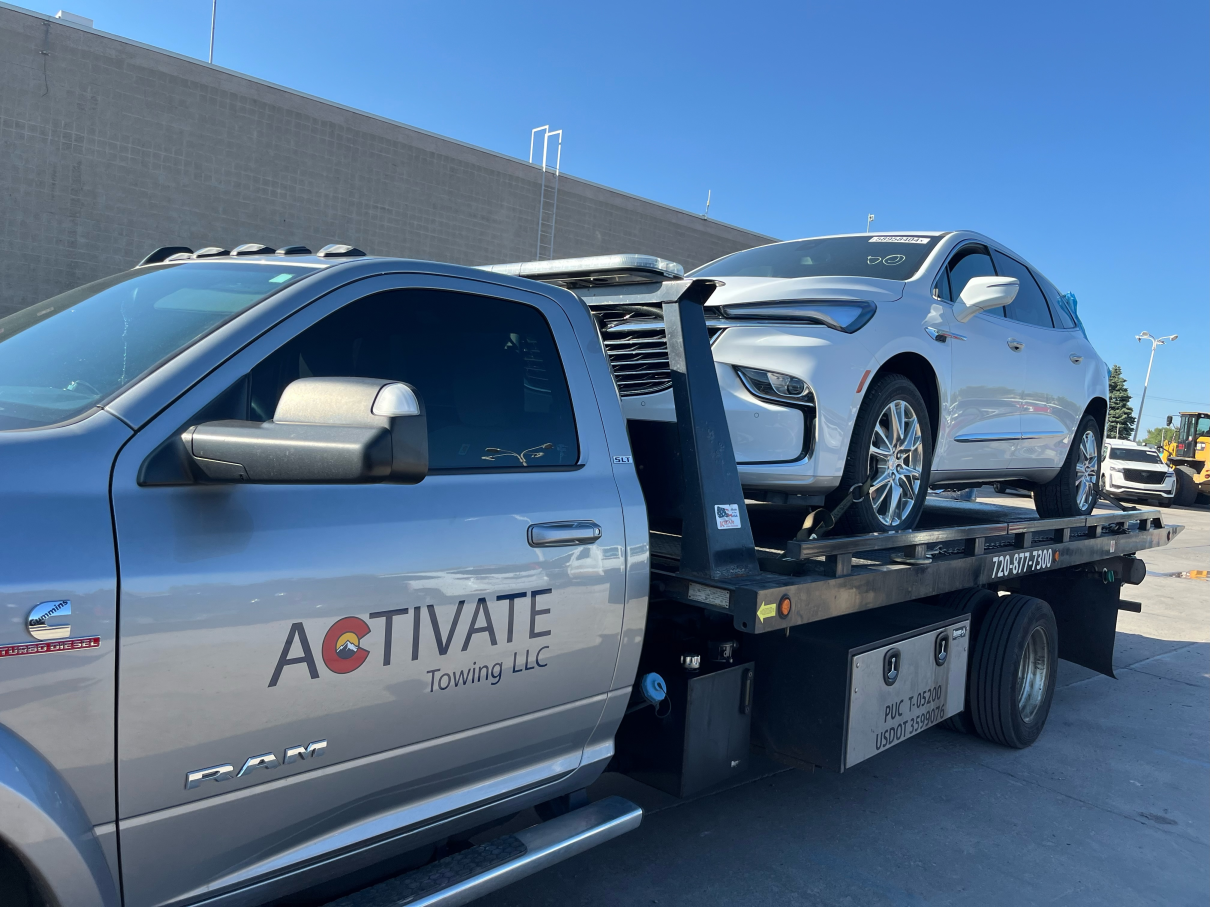
How Does Trusted Roadside Assistance Ensure Reliable Support?
You're stranded on the shoulder of I-25 during rush hour, hazards flashing, watching trucks blow past at seventy. That moment is why we set MUTCD-compliant cones and LED beacons before touching your vehicle. Colorado's Move Over Law requires drivers to shift lanes, but compliance is inconsistent, so we treat every scene as high-risk with proper safety protocols .
Safety and Transparency Standards
- Pre-Trip Equipment Inspection: Jump packs, winch lines, and PPE are tested before every shift.
- Shoulder Risk Assessment: We evaluate traffic speed, visibility, and slope before positioning equipment.
- Photo Documentation Protocol: Pre-service and post-service images protect both parties from damage disputes.
- Transparent Fee Disclosure: You receive the full quote including mileage and after-hours premiums upfront.
We had a call last winter where a driver insisted we jump a battery with corroded terminals and a cracked case. We refused and recommended a tow to a shop instead. The battery vented hydrogen sulfide during the attempted jump by the next operator who showed up.
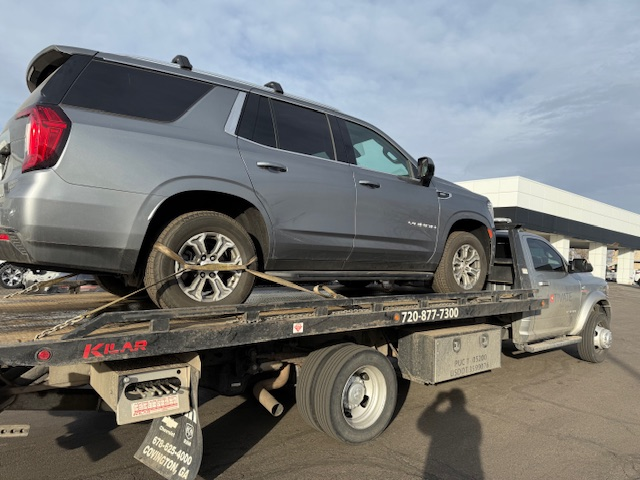
What to Expect During a Roadside Assistance Call
When you call, we confirm your GPS coordinates, vehicle make and model, and the specific symptom. ETAs vary: downtown Castle Rock averages thirty minutes, but rural US-85 stretches can take fifty during snow or peak traffic. We update you if delays occur.
Step-by-Step Service Flow
- Intake and Geolocation Verification: Dispatcher confirms your exact location and vehicle details before routing.
- Scene Setup and Traffic Control: Cones, beacons, and reflective triangles go up before we approach vehicle.
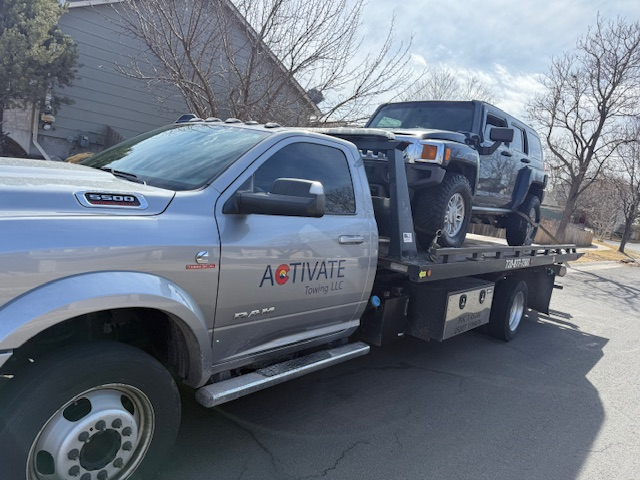
- Diagnosis and Service Execution: We test, repair, or recover based on the failure mode, and when a vehicle can't be repaired on-site, we arrange flatbed transport to a shop .
After the work, we perform a function check: does the engine start, are warning lights off, is tire pressure correct. You sign off digitally, receive a receipt coded for your insurer or motor club, and we reset equipment for the next call. In practice, this tends to take fifteen to thirty minutes on-scene for a jumpstart or tire change, longer for winch recoveries or complex lockouts where we need to access rear-seat linkages.
Serving Castle Rock and Surrounding Areas
Activate Towing serves residents and businesses throughout Castle Rock and the surrounding Douglas County area. Our team regularly responds to calls along the I-25 corridor, Meadows Parkway, and neighborhoods near the Outlets at Castle Rock. We also cover Larkspur, Sedalia, and the rural stretches of US-85 where cell coverage can be spotty. Scheduling is flexible, with 24/7 dispatch for emergencies and planned service windows for non-urgent needs.
Service Area
- Frequent calls in Roxborough Village, Highlands Ranch, and Parker for battery and tire failures.
- Clients near the Castle Pines business district and along Founders Parkway rely on our response times.
- Full coverage across Douglas County and adjacent corridors into Elbert County.
We dispatch across Castle Rock and neighboring communities with real-time routing to minimize your wait during breakdowns.
Frequently Asked Questions
How does Activate Towing handle after-hours roadside assistance calls in Castle Rock?+
Activate Towing operates around the clock with dispatchers who route calls based on location and issue severity. Response depends on weather conditions, distance from the nearest available truck, and whether specialized equipment is required for the situation.
After running through hundreds of late-night calls, the pattern is consistent: people assume nobody's available, but Activate Towing routes every request through live dispatch regardless of the hour. The truck assigned depends on what failed (battery, tire, lockout) and where you're stranded. Highway breakdowns get prioritized over parking lot situations. If you're stuck on a county road past midnight with a dead battery, expect contact within minutes once dispatch confirms your exact location and verifies the vehicle type.
What should drivers keep in their vehicle to minimize the need for roadside assistance in Castle Rock?+
Essential vehicle supplies include jumper cables, spare tire tools, coolant, and emergency flares. Preparedness reduces service call frequency, though mechanical failures still require professional help regardless of what you carry.
A basic emergency kit cuts down on preventable calls but won't eliminate the need for professional roadside help entirely. Jumper cables handle dead batteries if another vehicle is nearby. A properly inflated spare tire, jack, and lug wrench solve flat tire issues when the damage isn't sidewall related. Extra coolant and oil top off minor leaks until you reach a repair shop. Emergency flares or reflective triangles keep you visible during nighttime breakdowns. One thing that catches people off guard is how often they skip checking whether their spare is actually inflated or their jack handle is still in the trunk. Those items sit unused for years, then fail exactly when needed. A flashlight with fresh batteries and a first aid kit round out the basics.
Even well-stocked vehicles face situations beyond DIY fixes, like transmission failures, locked keys inside the car, or fuel delivery needs. If you're stranded with a problem your kit can't solve, call a local service provider who can dispatch help quickly and get you back on the road safely.
What information should I have ready when calling for roadside assistance in Castle Rock?+
Roadside assistance calls require your exact location, vehicle description, and specific problem to dispatch the right equipment. Providing your phone number and destination helps coordinate arrival timing and follow-up if signal drops.
Having the right details organized before placing a roadside assistance call can cut response time significantly. Dispatchers need specific information to route the correct truck and equipment, especially when dealing with lockouts versus mechanical failures. Most delays happen because drivers provide vague locations or incomplete vehicle details, forcing technicians to circle parking lots or arrive with the wrong tools.
Critical Details That Speed Up Dispatch:
- Precise Location Markers: Cross streets or landmark descriptions work better than GPS coordinates in areas with weak signal, particularly along Highway 85 or near Outlets at Castle Rock where multiple access points create confusion.
- Vehicle Specifics Beyond Make and Model: Year, color, and any identifying damage help technicians spot your car in crowded lots. Mentioning whether it's a hybrid or diesel matters for jump-starts and fuel delivery.
- Symptom Description Using Plain Language: Saying "the engine cranks but won't turn over" is more useful than "it's broken." If you heard grinding, clicking, or smelled burning, mention it.
- Your Callback Number and Backup Contact: Cell service drops in pockets around Castle Rock. A secondary number ensures the technician can reach you if they need clarification or you've moved to a safer waiting spot.
One thing that consistently slows service is drivers who step away from their vehicle without telling dispatch. If you need to wait inside a nearby business for safety reasons, communicate that upfront so the technician knows where to find you. The more context provided during the initial call, the fewer back-and-forth calls needed while a truck is already en route.
Why do Castle Rock drivers choose Activate Towing when their vehicle breaks down on I-25?+
Activate Towing handles highway breakdowns by dispatching equipped trucks to high-traffic corridors where shoulder space is limited. Response effectiveness depends on accurate location details and traffic conditions at the time of the call.
Activate Towing responds to I-25 breakdowns with trucks equipped for narrow shoulder work and high-speed traffic zones. We've found that most highway calls involve vehicles stuck in positions where standard tow hooks won't reach safely. Our operators ask for mile markers and nearest exit information before dispatch, which cuts confusion when multiple vehicles are stopped in the same stretch. If your car is disabled in a travel lane or merge zone, we coordinate with state patrol to secure the scene before arrival.
Can roadside assistance providers in Castle Rock help if my vehicle is stuck in snow or mud?+
Most roadside assistance providers handle vehicle extraction from snow, mud, or soft shoulder conditions using winches or recovery straps. Success depends on ground stability and vehicle weight, with some situations requiring specialized towing equipment instead.
Recovery from snow, mud, or soft terrain falls under most roadside assistance service agreements, though the approach varies based on how deeply the vehicle is embedded and what surface lies underneath. Light to moderate situations get resolved with a winch pull or traction aid placement. The honest limitation shows up when the vehicle has sunk past the axle or when repeated wheel spin has created a trench that's compromised the undercarriage clearance. At that point, extraction risks frame damage or requires a wrecker with dual winch capability, which crosses into towing territory rather than standard roadside support. Castle Rock's mix of unpaved access roads and sudden spring snowmelt creates plenty of shoulder dropoff scenarios where drivers misjudge ground firmness.
If your vehicle is stuck and you're unsure whether it's a quick pull or a full recovery job, describe the ground conditions and how far the wheels have sunk when you call. That detail helps dispatch the right equipment on the first trip and avoids a second callout with heavier gear.
Related Castle Rock, CO service pages.
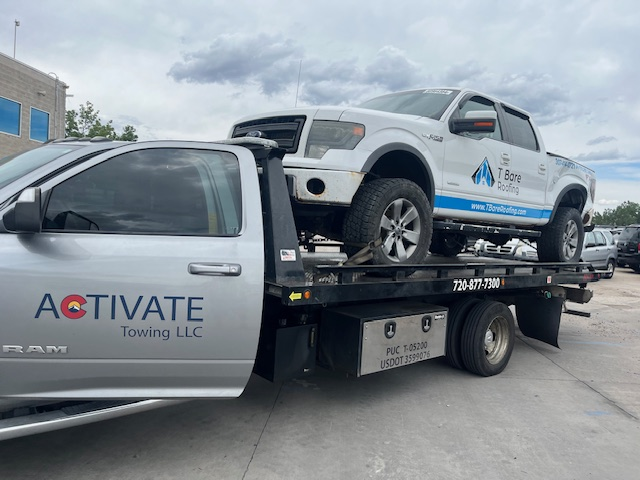
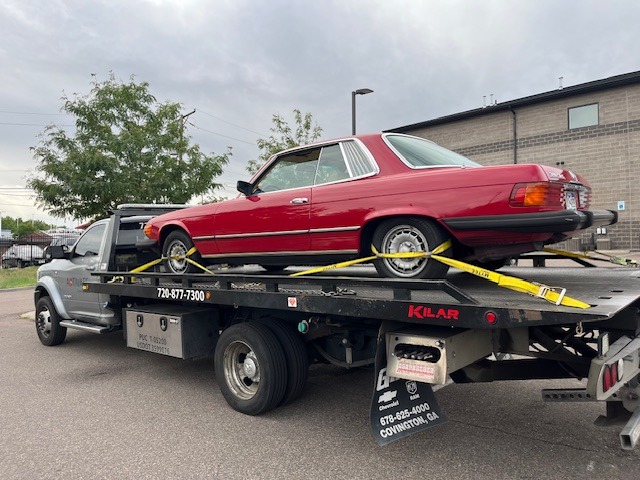
Stranded on I-25 or Need a Jump in Castle Rock?
Call Activate Towing now for GPS-verified dispatch, transparent pricing, and MUTCD-compliant traffic control. We handle battery failures, lockouts, tire changes, and winch recoveries with equipment rated for Colorado conditions. Digital receipts formatted for insurance and motor club reimbursement.