Castle Rock Medium-Duty Towing for Box Trucks and Commercial Vehicles
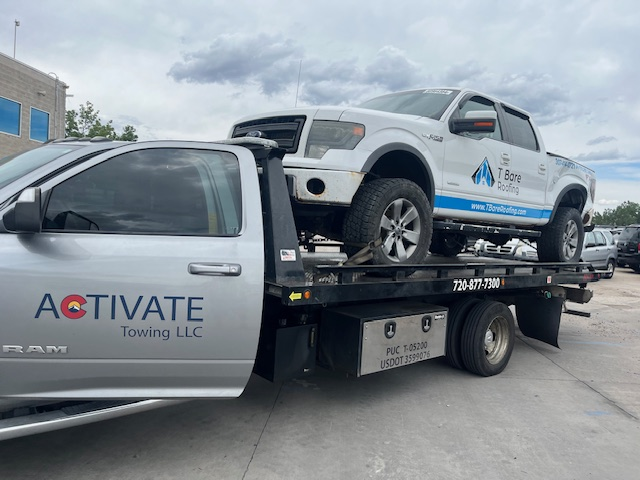
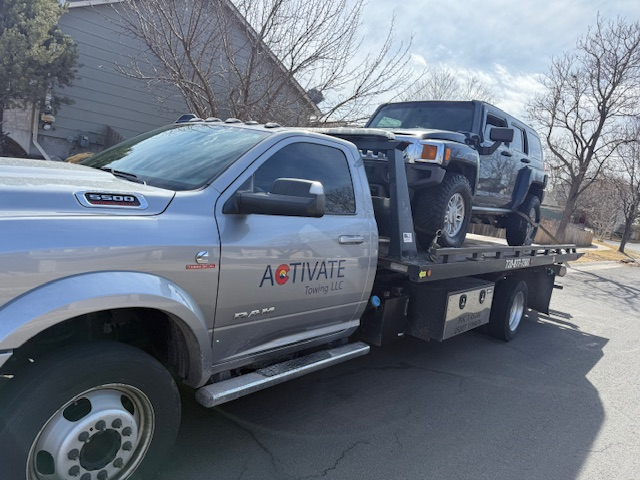
Activate Towing handles Class 4–6 vehicles across Castle Rock with integrated underlift and flatbed carriers rated for 10,000–26,000 lb GVWR. We supply air via gladhands, protect drivetrains, and secure loads per FMCSA 393. 128 tie-down standards.
Trusted by drivers across Douglas County
Live reviews straight from Google.
Fair medium-duty pricing, quoted before we roll in Castle Rock, CO.
We confirm vehicle class, weight, and accessibility on the call so you get a real number, not a moving target.
Sprinter vans, box trucks, work vans up to 14k GVWR. All-in flat rate.
Honest per-mile beyond 5 miles. Confirmed before we roll.
Bobtail and small trailer moves between yards and job sites.
Quote confirmed on the call. Pay on site.
Lock in your quote. 720-877-7300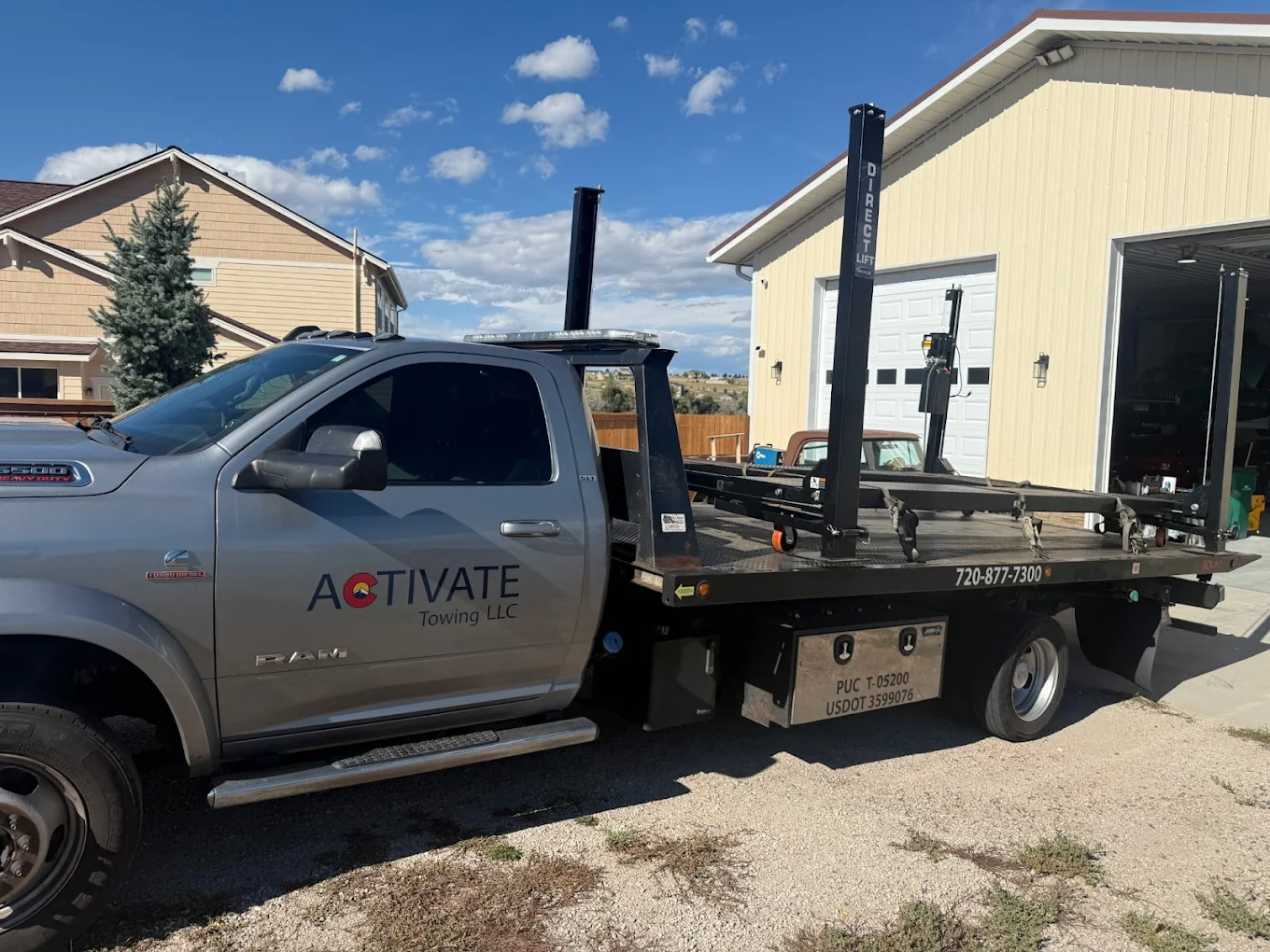
Why Best Medium-Duty Towing Requires Properly Rated Equipment
Most box trucks and step vans sit in the 14,000–22,000 lb range, which puts them firmly outside light-duty capacity. The issue isn't just weight. It's air brakes, driveline configuration, and the fact that a wheel-lift rated for 8,000 lb will bend under a loaded Isuzu NPR. We match truck capacity to vehicle GVWR before dispatch.
Equipment Capacity and Load Matching
- Underlift Tow Rating: Integrated underlifts rated 8–20 tons for Class 4–6 platforms
- Carrier Deck Length: 19–22 ft steel decks accommodate box trucks and shuttle buses
- Winch Line Pull: Hydraulic winches rated 12,000–20,000 lb for controlled loading
A delivery contractor called for a "stuck van" that turned out to be a loaded E-450 with dual rear wheels and a 16-foot box, 22,400 lb gross. The first truck sent was a light-duty wheel-lift that couldn't lift the rear axle without bottoming the boom. The job sat for another 45 minutes until a medium-duty underlift arrived. Match capacity to GVWR, or you're making two trips.
Air-Brake Handling and Driveline Protection for Commercial Platforms
Most medium-duty platforms use air brakes with spring-brake chambers that engage automatically when air pressure falls below 60 psi. You can't just hook and tow. We carry gladhand kits and caging tools to release brakes without damaging the system.
Gladhand Air Supply
We connect air lines to the truck's emergency and service gladhands, restoring pressure to release spring brakes without forcing the system. This prevents chamber damage and allows controlled loading.
Spring Brake Caging
If air supply is unavailable, we manually cage the spring brake chambers using threaded rods. This mechanically retracts the brake shoes, allowing wheel rotation without air pressure.
Driveline Disconnect
For rear-wheel-drive box trucks, we disconnect the driveline at the differential or engage tow mode if equipped. This prevents transmission damage during underlift or dolly towing .
Neutral Override
Automatic transmissions in many medium-duty trucks require a neutral override procedure, often a solenoid release or shift-lock bypass, to allow towing without the engine running.
FMCSA Securement Standards and WLL Calculations
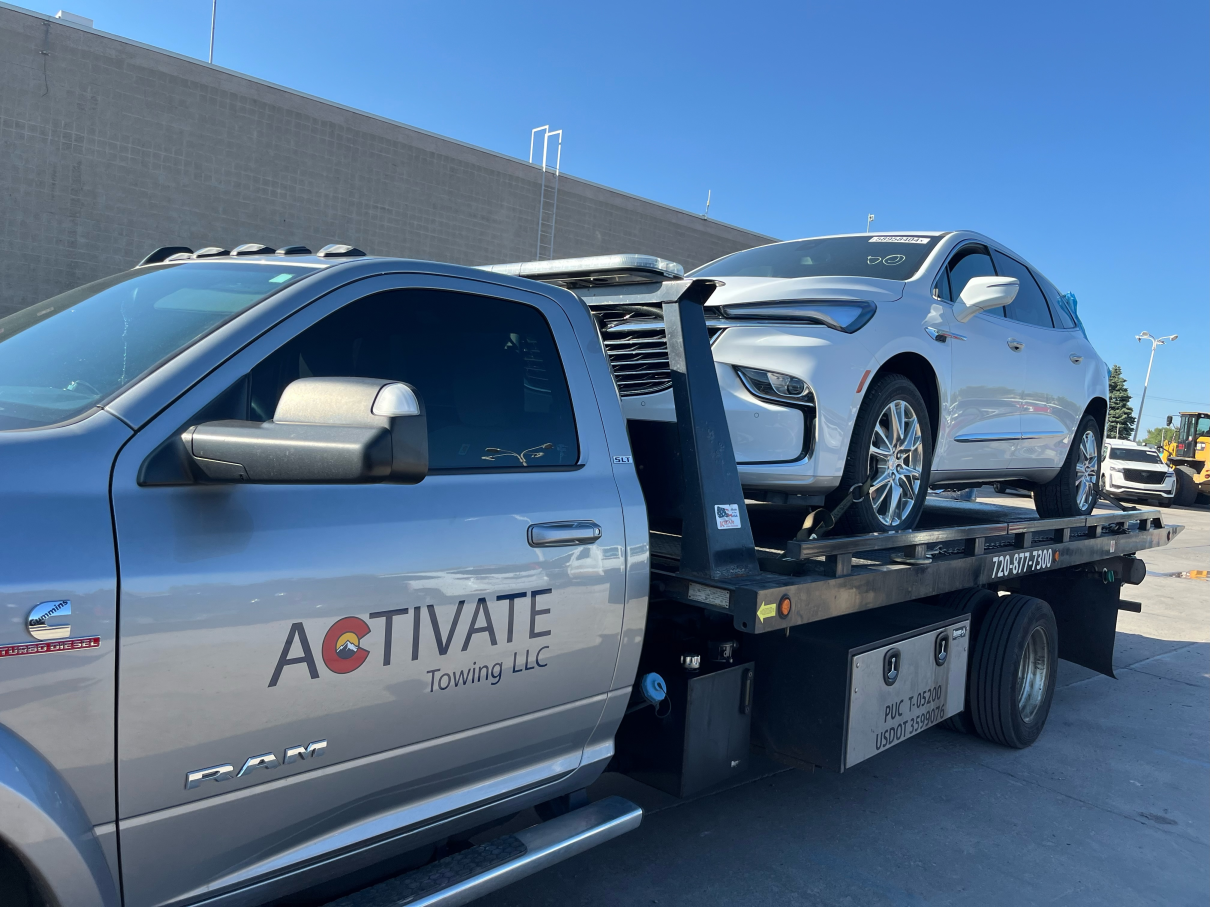
FMCSA 393.128 requires vehicles over 10,000 lb to be secured with four tie-downs, each with a working load limit equal to or greater than 50% of the vehicle's weight divided by four. We use grade 70 transport chain and polyester wheel nets with documented WLL ratings.
Tie-Down Count
Vehicles under 10,000 lb need two tie-downs; over 10,000 lb require four. We add cross-chains at the rear axle for box trucks to prevent lateral shift during transport.
Working Load Limit
Each tie-down must have a WLL of at least 1/4 the vehicle weight. For a 20,000 lb box truck, that's 5,000 lb per strap or chain. We use grade 70 chain with grab hooks rated 6,600 lb WLL.
Anchor Point Selection
We attach to frame rails, tow eyes, or axle straps, never to suspension components, brake lines, or body panels. Anchor points must support the applied load without deformation.
Photo Documentation
Every securement setup is photographed before transport, showing chain placement, hook engagement, and WLL tags. This creates a compliance record for fleet managers and insurers.
Trusted Medium-Duty Towing for Reliable On-Scene Support
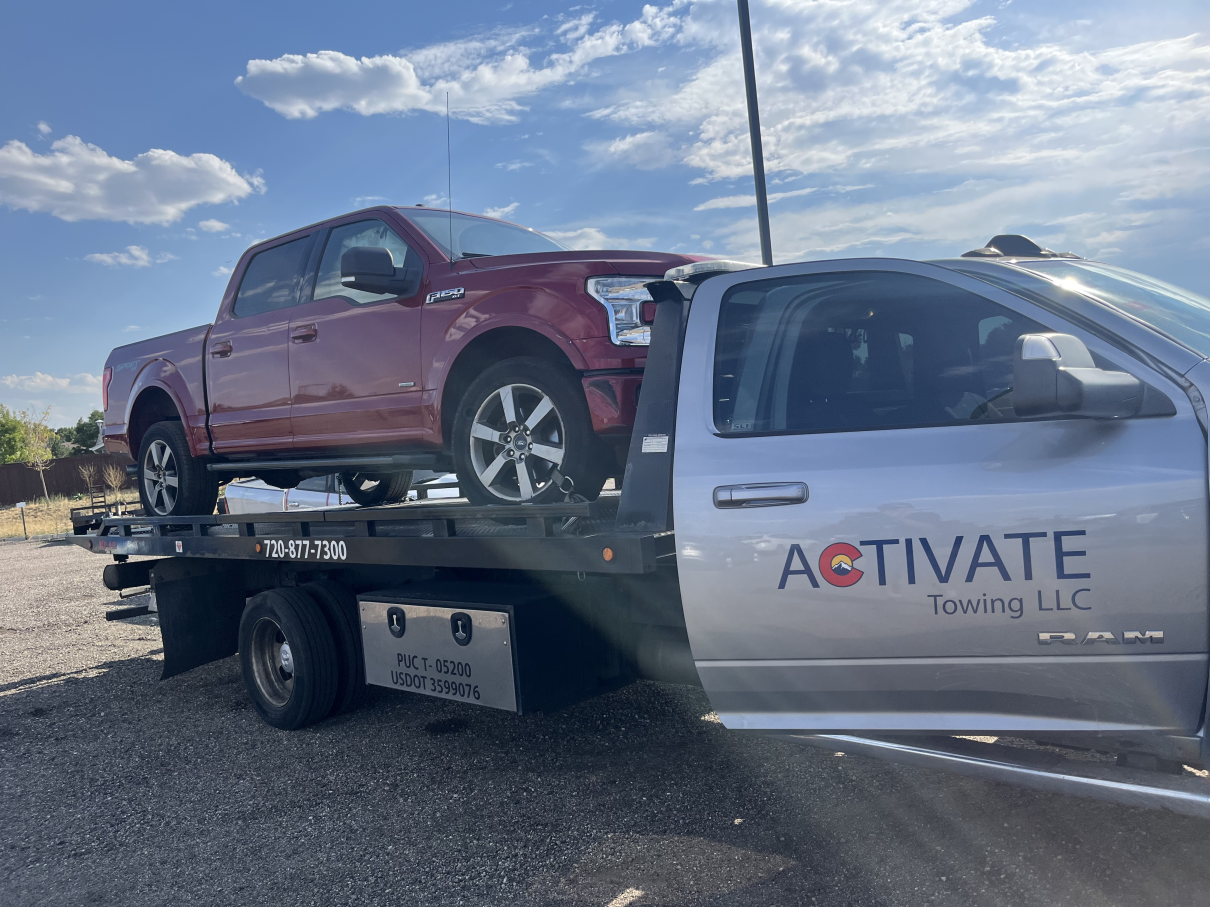
The worst medium-duty calls are the ones where the first truck shows up and can't handle the job. We verify vehicle class, GVWR, and load condition during intake, then dispatch the correct truck with the right rigging.
Intake Triage
Our dispatch asks for vehicle make, model, and whether cargo is loaded. A loaded box truck weighs 8,000–12,000 lb more than empty, which changes the tow rating and rigging plan.
CDL Class B Operators
Colorado requires a CDL with air-brake endorsement to operate tow trucks over 26,000 lb GCWR. Our drivers hold Class B licenses and complete annual air-brake recertification.
GPS ETA Tracking
We send a live GPS link when the truck is dispatched. You see arrival time, route, and driver contact, no guessing when help will arrive on I-25 or Monument Hill.
DVIR Pre-Trip Inspection
Every truck completes a driver vehicle inspection report before leaving the yard. We check hydraulic fluid, winch rope, lighting, and tie-down inventory, no surprises on scene.
Understanding Medium-Duty Towing Capabilities and Vehicle Limits
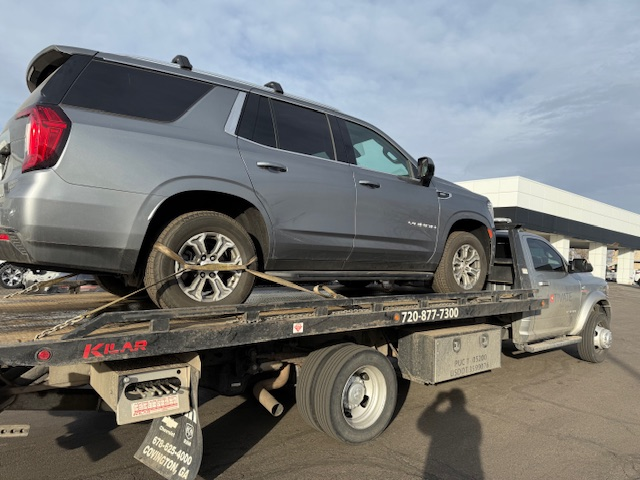
You're staring at a disabled shuttle bus on the shoulder of I-25, and the first question is whether your insurance roadside plan covers "medium-duty." Most don't. The second question is whether the truck that shows up can actually lift it. Class 4–6 vehicles range from 14,001 to 26,000 lb GVWR, and not every tow truck is rated for the upper end of that span.
Class and Capacity Boundaries
- Class 4 Vehicles: 14,001–16,000 lb GVWR: dually pickups, small box trucks, step vans
- Class 5 Vehicles: 16,001–19,500 lb GVWR: larger box trucks, shuttle buses, small RVs
- Class 6 Vehicles: 19,501–26,000 lb GVWR: Isuzu NPR, Ford F-650, single-axle dumps
- Tow Truck GCWR: Gross combination weight rating must exceed truck + towed vehicle weight
We once dispatched a 20-ton underlift for a "box truck" that the caller described as "medium size." It was a Ford F-750 with a 26-foot box and a GVWR of 33,000 lb, Class 7, not Class 6. The underlift couldn't safely lift it, and we had to call a rotator. The job sat for two hours. We ask for door placard weight now, every time.
Serving Castle Rock and Surrounding Areas
Activate Towing serves commercial fleets and owner-operators throughout Castle Rock and the surrounding corridor. Our trucks regularly work in Highlands Ranch, Parker, and along the I-25 business district from Lincoln Avenue south to the Douglas County line. We dispatch 24/7 with flexible arrival windows for after-hours breakdowns and scheduled transport.
Service Area
- Our team regularly handles calls in Roxborough Village and Sedalia.
- Clients near the Outlets at Castle Rock and Promenade corridor.
- Full coverage across the greater Castle Rock metro area.
We coordinate arrival times around your schedule, including early morning and weekend dispatch for fleet operators.
Frequently Asked Questions
What types of vehicles fall within medium-duty towing weight limits?+
Medium-duty towing handles vehicles between 10,001 and 26,000 pounds, including box trucks, shuttle buses, RVs, and delivery vans. The exact capacity depends on the tow truck's rated equipment and whether the vehicle's drivetrain is intact or compromised.
Box trucks, step vans, shuttle buses, larger RVs, and commercial delivery vehicles typically fall into the medium-duty range. One thing that catches people off guard is that a vehicle's curb weight and its loaded weight can differ by several thousand pounds, so operators verify the actual load before rigging. If the suspension is collapsed or the frame is bent from a collision, the towing method changes even if the weight stays within limits. Confirm the vehicle's gross weight and damage condition before scheduling a tow to avoid equipment mismatches on scene.
How does Activate Towing handle complex medium-duty recoveries in Castle Rock?+
Medium-duty recoveries require rigging assessment, weight distribution analysis, and equipment staging before the actual pull begins. Complexity increases when vehicles rest on slopes, soft shoulders, or unstable terrain that limits anchor points.
Activate Towing approaches complex medium-duty recoveries by treating each scene as a rigging problem first and a tow second. We walk the recovery zone, identify anchor points (often using the tow truck itself or portable ground anchors), and calculate load angles before attaching anything to the disabled vehicle. Box trucks stuck in drainage ditches or delivery vans lodged against retaining walls present different challenges than straightforward roadside breakdowns. One thing that catches people off guard is how much prep happens before the winch engages. If the vehicle's frame is twisted or the suspension collapsed, we stabilize it with cribbing or air bags to prevent further damage during extraction. Activate Towing carries rigging straps rated for uneven pulls, not just standard tow hooks, because medium-duty vehicles often need multi-point lifts when one axle is compromised or the load shifted during the incident.
If your medium-duty vehicle is stuck in a position where standard towing won't work, call Activate Towing and describe the scene in detail (terrain, vehicle angle, visible damage). We'll bring the rigging gear and extraction tools needed for a controlled recovery, not just a truck with a hook.
What equipment does Activate Towing use to secure medium-duty vehicles during transport in Castle Rock?+
Medium-duty towing relies on wheel-lift or flatbed systems paired with adjustable straps, chains, and J-hooks rated for vehicle weight. Equipment choice depends on vehicle condition, drivetrain type, and whether the frame or suspension is compromised.
Activate Towing equips medium-duty tow trucks with wheel-lift systems or flatbed carriers, depending on the vehicle's condition and weight distribution. Wheel-lift rigs work well for intact suspensions and allow faster hookup on roadside calls, while flatbeds handle vehicles with frame damage, all-wheel drive configurations, or situations where ground clearance matters. Both setups use rated chains, nylon straps with protective sleeves, and adjustable J-hooks to distribute load across anchor points without stressing body panels or suspension mounts.
Load Securement Components for Medium-Duty Hauls:
- Wheel-Lift Cradles: Hydraulic arms lift the front or rear axle, keeping two wheels on the ground for short-distance moves when the drivetrain allows.
- Flatbed Winches: Electric or hydraulic winches pull disabled vehicles onto the bed, avoiding further stress on damaged suspension or steering components.
- Rated Tie-Down Hardware: Chains and straps are selected based on vehicle weight, with working load limits verified before each transport to prevent anchor failure during transit.
- Frame Contact Points: Hooks attach to factory tow points or subframe rails, not bumper covers or body trim, to avoid cosmetic damage or structural flex during the haul.
One thing that catches fleet managers off guard is how quickly improper hookup points can bend brackets or crack fiberglass. Activate Towing inspects anchor locations before rigging, especially on box trucks or cutaway vans where aftermarket bodies obscure the original frame. If your medium-duty vehicle is stranded and you're unsure whether wheel-lift or flatbed transport is safer, call Activate Towing and describe the damage over the phone so the right equipment shows up the first time.
How do professional towing operators determine if a vehicle requires medium-duty versus light-duty equipment?+
Weight classification depends on gross vehicle weight rating (GVWR), vehicle configuration, and load condition at the time of service. Operators assess manufacturer specs and visible indicators to match appropriate tow capacity and prevent equipment failure during transport.
The decision hinges on GVWR stamped on the driver's door jamb, not just visual size. A box truck rated at 12,000 pounds needs medium-duty rigging even if it looks compact. Operators also check axle count, dual rear wheels, and whether cargo is still loaded. One thing that catches people off guard is that a half-empty delivery truck still counts at its rated capacity, not its current weight, because towing stresses the frame and suspension as if fully loaded. If you're unsure whether your commercial vehicle falls into medium-duty range, describe the make, model, and GVWR when you call for dispatch.
What safety protocols do professional towing operators follow when loading medium-duty vehicles onto a flatbed?+
Professional operators secure medium-duty vehicles using wheel straps, axle chains, and frame tie-downs positioned at manufacturer-specified anchor points. Load stability depends on proper weight distribution across the deck, which prevents shifting during transport over uneven terrain.
Loading a medium-duty vehicle onto a flatbed requires more than just driving it up the ramp. The operator walks the perimeter first, checking for frame damage, loose body panels, or fluid leaks that could create hazards during transport. Once positioned on the deck, the vehicle gets secured at four corners minimum using a combination of wheel straps rated for the load and chains attached to axle or frame points. The honest reality is that many roadside breakdowns involve vehicles with compromised suspension or steering components, so operators avoid relying solely on the parking brake or transmission park gear to hold the vehicle in place during loading.
Weight distribution matters more than most people expect. A box truck loaded with cargo shifts its center of gravity rearward, so deck positioning has to compensate or the tow truck becomes tail-heavy on highway grades. If your medium-duty vehicle needs transport and you're unsure about load securement for your specific setup, reach out to a qualified towing specialist who can assess the frame condition and anchor points before loading begins.
Related Castle Rock, CO service pages.
Need a Medium-Duty Tow for Your Box Truck or Shuttle Bus?
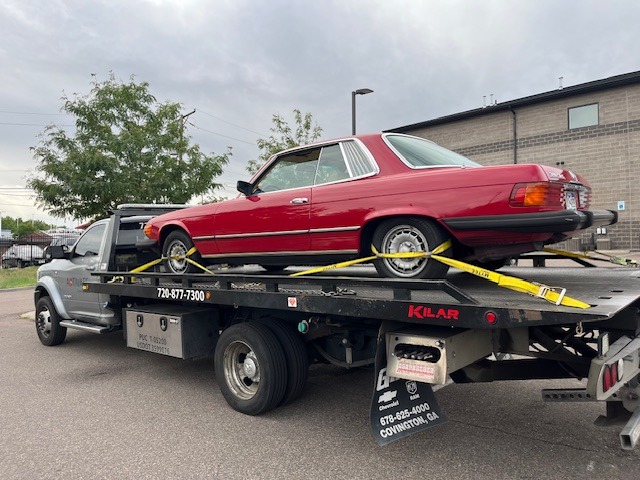
We dispatch wheel-lift and flatbed carriers rated for Class 4–6 vehicles across Castle Rock. Air-brake handling, driveline protection, and FMCSA-compliant securement included. Call now for fast response and upfront pricing.