Castle Rock Flatbed Towing for All-Wheel Drive and Electric Vehicles
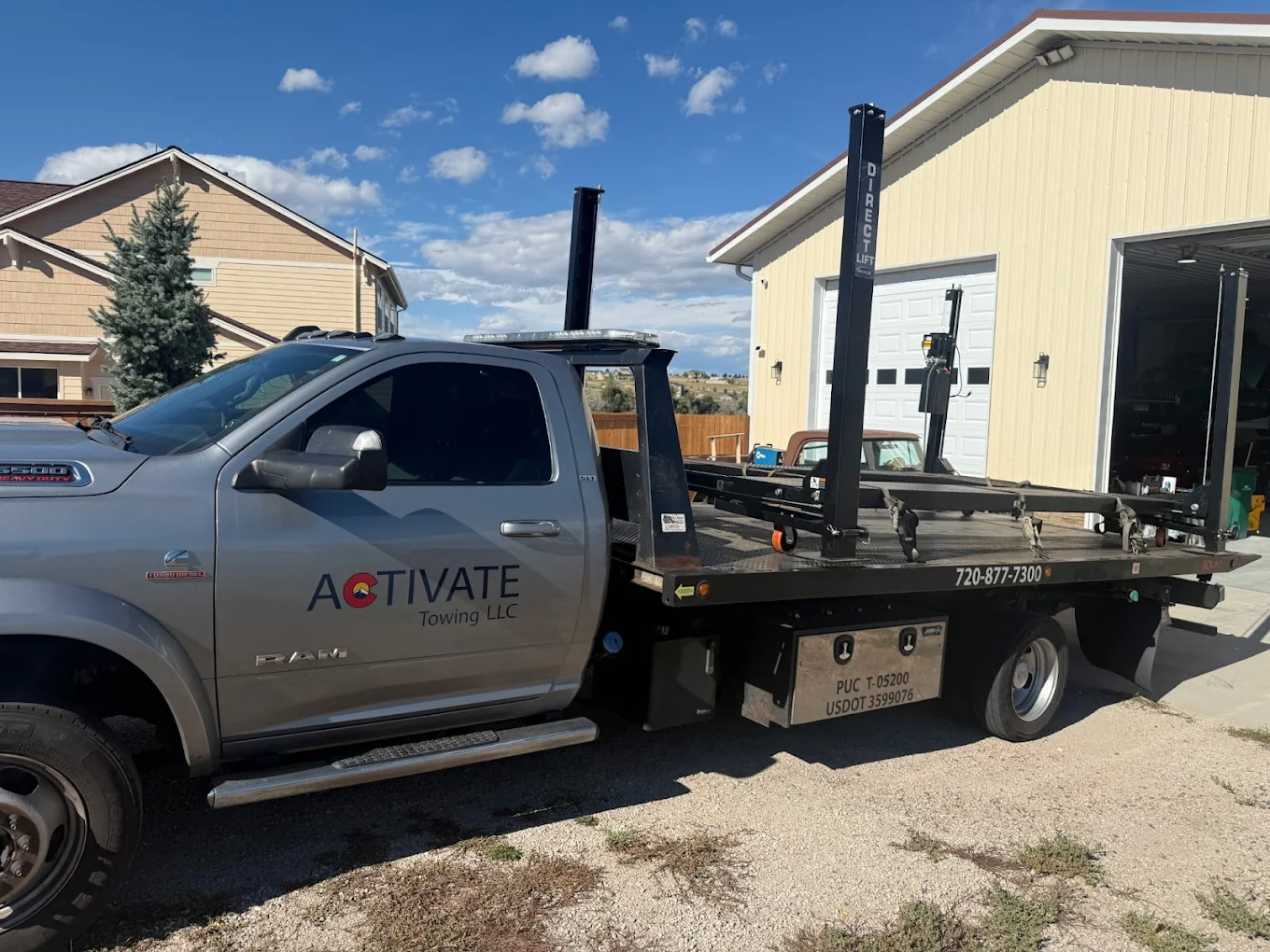
Activate Towing operates hydraulic rollback carriers throughout Castle Rock for damage-free transport of AWD, electric, and low-clearance vehicles. Licensed, insured, and equipped with 4-point wheel strap securement, we provide transparent quotes before dispatch.
Trusted by drivers across Douglas County
Live reviews straight from Google.
Flatbed pricing. Locked in over the phone in Castle Rock, CO.
Premium flatbed work, fair price. The number we say on the call is the number you pay at drop-off.
All-in flatbed tow for AWD, 4WD, EV, and lowered vehicles.
Honest hook-up + per-mile beyond 5 miles.
Lowered splitters, sport-car ramps, or tight-access load-ins.
Quote confirmed on the call. Pay on site.
Lock in your quote. 720-877-7300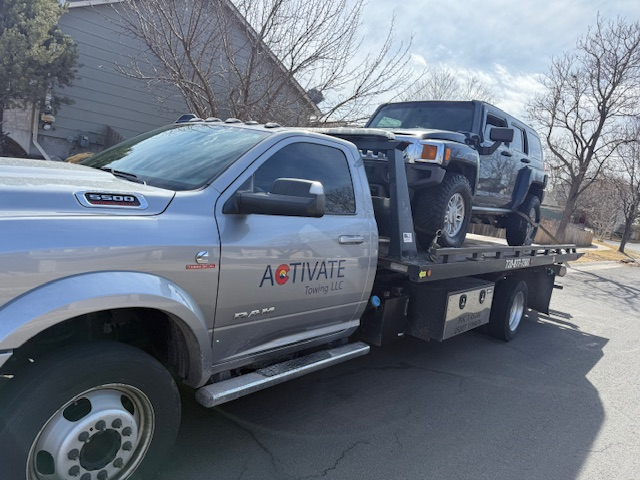
Best Flatbed Towing Options for Reliable Vehicle Recovery
Most tow calls in Castle Rock involve vehicles that shouldn't be dragged. AWD crossovers, Teslas in tow mode, slammed Subarus. Rollback transport exists because wheel-lift methods risk transmission damage, suspension contact, and warranty voids nobody wants to explain later.
What Makes Rollback Transport Different
- Hydraulic Tilt Deck: Lowers approach angle to 10 degrees for ground clearance
- Winch Capacity: 8,000 to 12,000 lb pull for stuck or locked vehicles
- Tie-Down Configuration: Four-point wheel straps plus backup chains per 49 CFR 393.128
Flatbed operators who've been doing this a while know the loading process matters more than the truck itself. Deck angle, winch speed, strap placement- get one wrong and you're explaining paint damage or a cracked bumper. The good news: it's not complicated, just deliberate.
Why Castle Rock Drivers Choose Rollback Carriers
Castle Rock sits at 6,224 feet, straddling the gap between Denver sprawl and mountain towns. Vehicles here see elevation swings, sudden weather, and long commutes that expose mechanical failures far from home.
All-Wheel Drive Protection
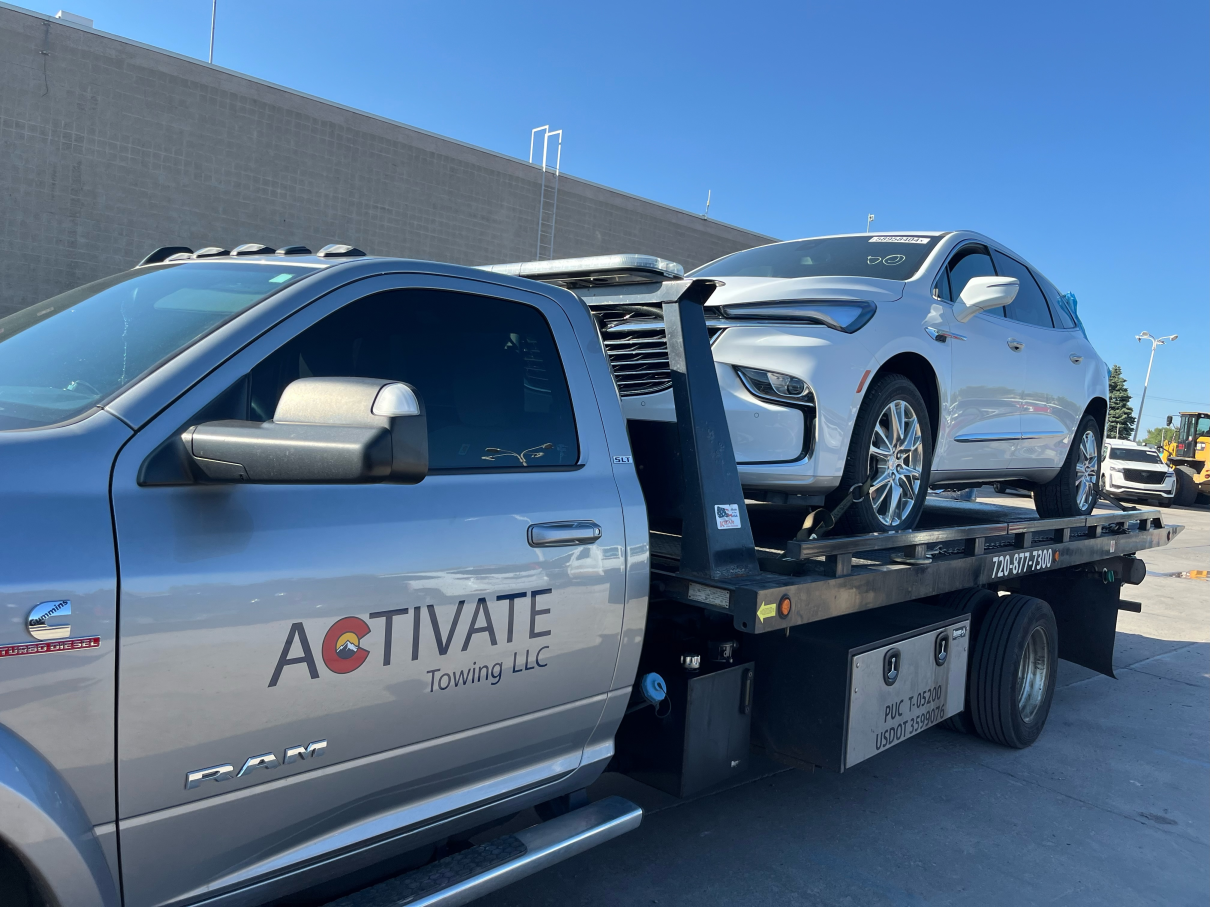
Dragging one axle on an AWD vehicle spins the driveline against a locked differential. The rollback lifts all four wheels, eliminating the risk of transfer case or transmission damage during transport.
Electric Vehicle Compliance
Tesla, Rivian, and other EVs require transport mode activation or complete lift-off to prevent inverter faults. We confirm tow mode status before loading and document the procedure for warranty protection.
Low-Clearance Accommodation
Lowered cars, sport sedans, and exotics scrape on standard ramps. Our hydraulic tilt reduces deck angle to single digits, and we carry aluminum ramp extensions and wheel skates for ultra-low front splitters.
Accident and Collision Recovery
Vehicles with front-end damage, flat tires, or deployed airbags often can't roll. The winch pulls them onto the deck without requiring steering, braking, or drivetrain function, critical when recovering collision-damaged vehicles .
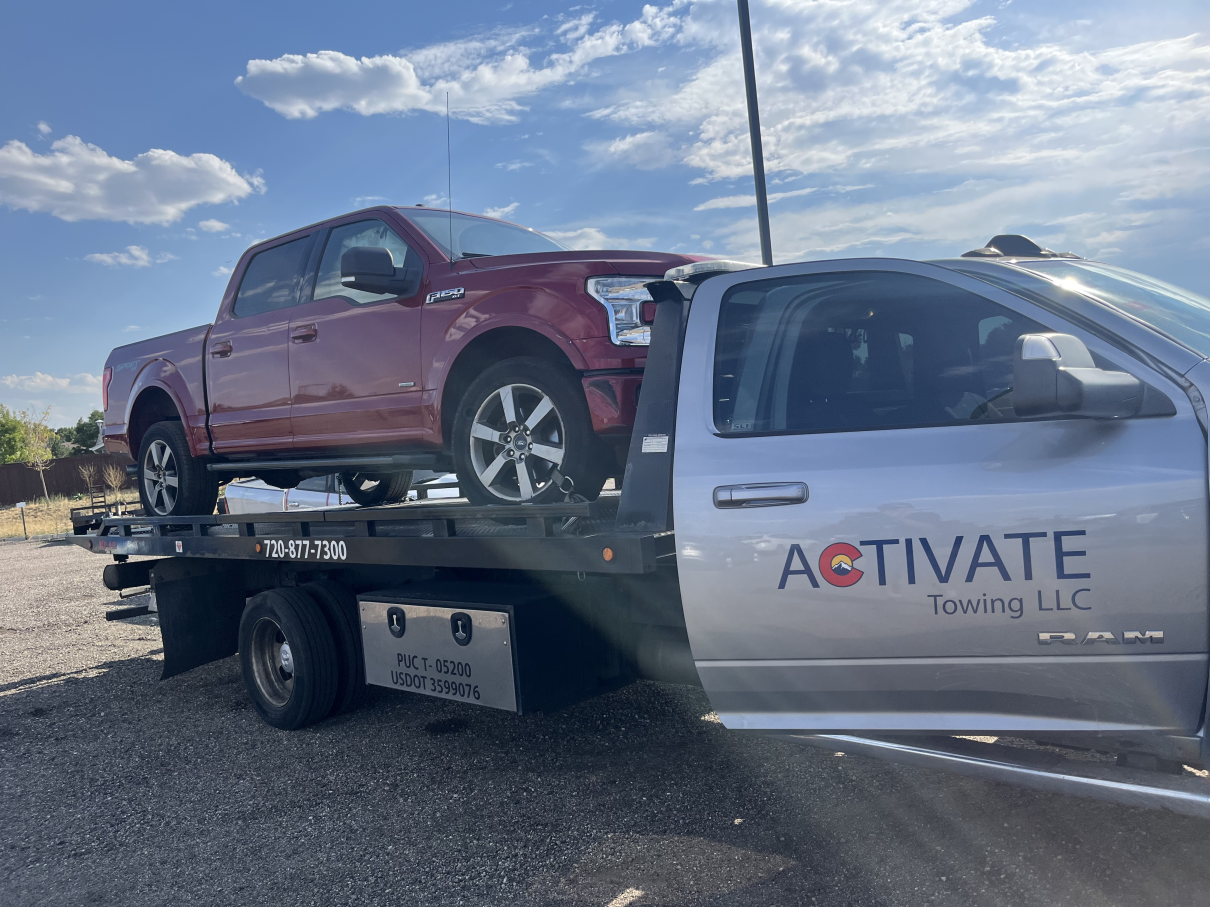
Trusted Services for Safe Transport
You're standing next to a disabled car, phone in hand, scrolling through tow companies that all promise the same thing. The question isn't who can show up, it's who won't make the problem worse by dragging your car onto a hook. Professional light-duty transport requires the right equipment and technique.
How We Secure Vehicles on the Deck
- Wheel Strap Placement: Straps loop through wheel spokes, not around tires or suspension
- Working Load Limit: Each strap rated 5,400 lb WLL per WSTDA T-1 standard
- Backup Chain Requirement: Grade 70 chain at each corner as secondary securement
- Deck Anchor Points: Recessed D-rings every 18 inches along both deck rails
Four-point securement isn't negotiable, and neither is the pre-transport inspection. We've seen operators skip the tension check to save three minutes, then spend an hour dealing with a shifted load at highway speed. The process exists because shortcuts have consequences, usually expensive ones.
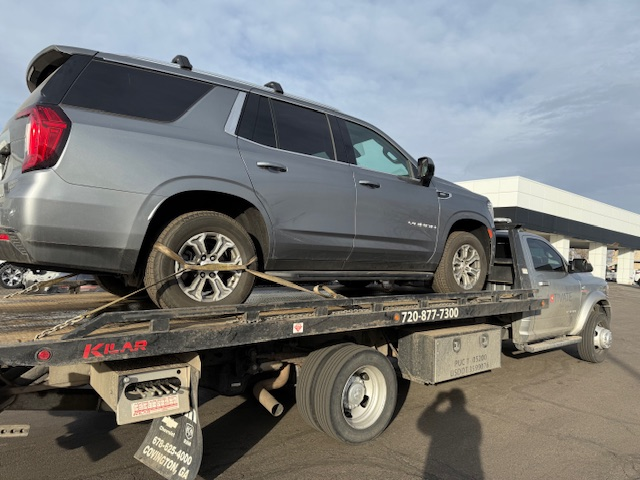
How Does Flatbed Towing Protect Your Vehicle During Recovery?
The rollback eliminates the failure modes that come with wheel-lift and dolly setups. No driveline spin, no suspension contact, no curb scrapes during loading. The vehicle sits on the deck the same way it sits in a parking space, stationary and level.
What Happens During a Typical Load
- Scene Positioning: Truck backs in, deck tilts, hydraulic slide extends ramps
- Winch-On Procedure: Cable hooks to frame or tow point, slow pull with operator guiding
- Deck Leveling: Hydraulics retract slide and return deck to horizontal for transport
- Securement Application: Straps and chains applied, tension verified, lighting and cameras checked
A client once called from a King Soopers parking lot with a snapped serpentine belt and no power steering. The vehicle wouldn't roll straight, the wheels were locked at an angle, and the lot was packed. Took twenty minutes to reposition and load correctly, but the alternative was a tow bill and a body shop estimate.
Serving Castle Rock and Surrounding Areas
Activate Towing serves residents and businesses throughout Castle Rock and Douglas County. Our carriers regularly operate along the I-25 corridor between Lone Tree and Monument, covering Roxborough, Sedalia, and Larkspur. We schedule around your availability, including after-hours and weekend calls when most breakdowns occur.
Service Area
- Teams work regularly in Highlands Ranch, Parker, and the Meridian neighborhoods.
- Clients near the Outlets at Castle Rock and Promenade shopping districts.
- Full response capability across the greater Castle Rock metro area.
Flexible dispatch throughout Castle Rock, with real-time routing to reduce wait times during peak traffic hours.
Frequently Asked Questions
What types of vehicles actually need flatbed towing instead of a standard wheel-lift?+
Flatbed towing is necessary for all-wheel-drive vehicles, luxury cars with low ground clearance, motorcycles, and anything with drivetrain or suspension damage. Wheel-lift methods can cause transmission or undercarriage damage when the wrong vehicle gets hooked.
All-wheel-drive and four-wheel-drive vehicles are the most common candidates, since towing with two wheels on the ground can destroy the transfer case. Luxury sedans with front air dams or carbon-fiber splitters often can't clear a wheel-lift without scraping. Motorcycles need a bed. Anything with a snapped axle, collapsed suspension, or missing wheels has no safe alternative. One scenario that catches people off guard is older rear-wheel-drive cars with locked transmissions, where a standard tow can shear internal gears if the driveshaft isn't disconnected first.
How does Activate Towing protect low-clearance vehicles during flatbed towing in Castle Rock?+
Flatbed towing protects low-clearance vehicles by eliminating ground contact during loading and transport, preventing undercarriage damage. Protection depends on proper winch tension and deck angle adjustment during the initial pull.
Low-clearance vehicles (sports cars, modified sedans, anything with aftermarket body kits) scrape on traditional wheel-lift equipment because the rear end lifts while the front still drags. Activate Towing uses hydraulic tilt beds that drop nearly flat to the pavement, which lets the winch pull the vehicle straight onto the deck without forcing it over a ramp angle. The honest issue we see most often is impatience during the load. If the operator rushes the winch pull before confirming tire placement on the deck guides, even a flatbed can catch a front splitter or exhaust tip on the transition point. We adjust deck tilt in half-degree increments for anything sitting below four inches of ground clearance, and we recheck strap position twice before the bed tilts back to transport angle.
If your vehicle has custom aero work or lowered suspension and you're concerned about clearance during recovery, call Activate Towing before the truck rolls. We'll confirm deck specs and walk through the load process so you know exactly how your car will be secured without contact damage.
Why do Castle Rock drivers choose Activate Towing for long-distance flatbed transport?+
Flatbed towing for long-distance moves protects vehicles from additional wear by keeping all four wheels off the pavement. Stability depends on proper tie-down configuration and route planning that avoids jarring road conditions.
Long-distance flatbed towing demands more than just loading a vehicle and driving. Activate Towing handles extended transport by securing vehicles to prevent shifting during highway speeds, lane changes, and elevation changes common on routes leaving Castle Rock. The flatbed method keeps luxury cars, modified vehicles, and anything with existing damage from accumulating road wear over hundreds of miles, which matters when the destination could be across state lines or to a specialized repair facility that isn't local.
What separates competent long-haul flatbed work from risky shortcuts:
- Tie-Down Redundancy: Multiple attachment points distribute load stress and prevent movement even when hitting rough interstate patches or sudden braking scenarios.
- Route Selection: Avoiding construction zones and poorly maintained stretches reduces vibration that can loosen securing points or stress already compromised suspension components.
- Weather Monitoring: Rain, ice, and high winds change how a loaded flatbed handles, so real-time adjustments to speed and following distance keep the vehicle stable throughout the trip.
One thing that catches people off guard is how much road vibration transfers to a vehicle during long flatbed hauls, even when it looks perfectly still. Activate Towing uses frame contact points and adjustable straps to minimize that transfer, which protects alignment and undercarriage integrity. If you're moving a vehicle farther than the next county and want it arriving in the same condition it left, call Activate Towing to discuss routing and securing methods before the truck rolls.
Can flatbed towing prevent damage to vehicles with aftermarket modifications or custom suspensions?+
Flatbed towing eliminates wheel contact and drivetrain stress, making it the safest option for lowered vehicles, custom exhausts, and modified suspensions. Damage risk increases significantly with wheel-lift methods that can scrape ground effects or strain altered geometry.
Aftermarket lowering kits and custom exhaust systems sit close enough to pavement that traditional towing often scrapes or tears components during loading. Flatbed transport keeps the entire vehicle off the ground, avoiding contact with ramps or lift arms that can catch on body kits or modified undercarriages. If your suspension geometry has been altered or you're running air ride setups, a flatbed prevents the uneven weight distribution that happens when only two wheels are lifted. Reach out to a flatbed specialist before the truck arrives so they know what clearance challenges to expect.
What happens to all-wheel drive systems during flatbed towing, and why does the method matter?+
Flatbed towing keeps all four wheels off the ground, preventing drivetrain damage in AWD and 4WD vehicles where power distribution systems can bind or overheat if any wheels rotate during transport.
All-wheel drive and four-wheel drive systems distribute power across multiple wheels through a transfer case, center differential, or electronic coupling. If even one wheel stays on the ground during transport, the drivetrain interprets the rotation mismatch as wheel slippage and tries to compensate, which generates heat and can strip internal gears or burn out clutch packs. Flatbed towing eliminates that risk entirely by lifting the entire vehicle onto a platform where no wheels make contact with the road. This is why manufacturers like Subaru, Audi, and most truck builders explicitly require flatbed transport in their owner's manuals. Wheel-lift or dolly methods leave at least two wheels down, and that's enough to cause expensive internal damage on vehicles with permanent or automatic AWD engagement.
If your vehicle has AWD, 4WD, or a locking differential, confirm that the towing service uses a true flatbed before dispatch. Drivetrain repairs from improper towing can exceed several thousand dollars and often aren't covered under warranty if the tow method violated manufacturer guidelines.
Related Castle Rock, CO service pages.
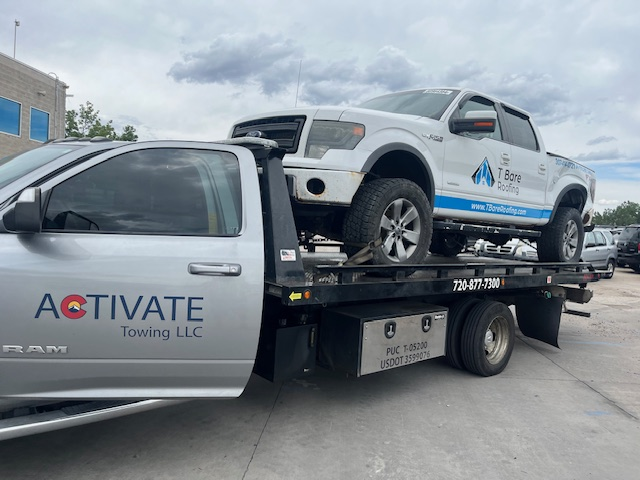
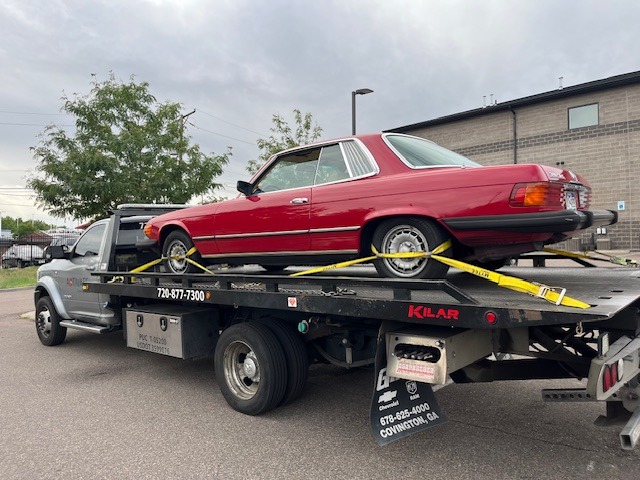
Need a Flatbed for Your AWD or Electric Vehicle Right Now?
We dispatch hydraulic rollback carriers 24/7 across Castle Rock with transparent pricing and ETA confirmation before the truck rolls. No hidden fees, no wheel-lift shortcuts, no damage risk. Call now for immediate dispatch or request a quote online.