Castle Rock Accident Recovery and Collision Towing for Front Range Drivers
Activate Towing delivers accident recovery and collision towing across Castle Rock, coordinating with Colorado State Patrol and local law enforcement on I-25 and county roads. Every recovery follows Colorado PUC pricing rules, includes time-stamped photos, and provides itemized invoices for insurance claims.
Trusted by drivers across Douglas County
Live reviews straight from Google.
Honest accident-recovery pricing in Castle Rock, CO.
Insurance-friendly invoicing, no padded mileage, and the rate confirmed before we leave the yard.
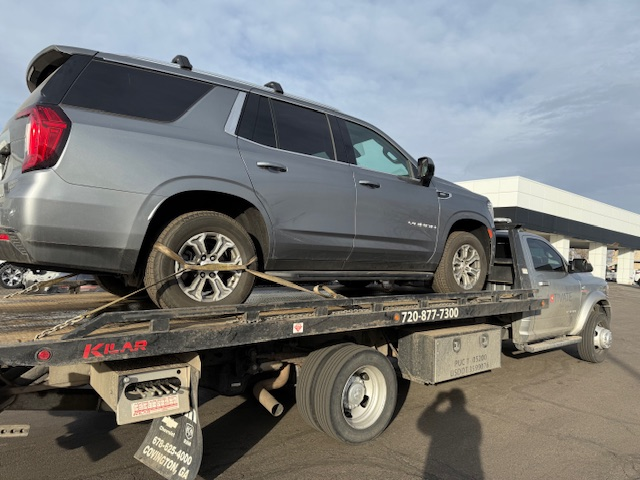
Drivable or rolling vehicles loaded carefully and delivered to your shop.
Vehicles off the roadway, stuck in mud/snow, or rolled. Billed in 30-min increments.
Broken glass, plastics, and fluid absorption from the scene.
Quote confirmed on the call. Pay on site.
Lock in your quote. 720-877-7300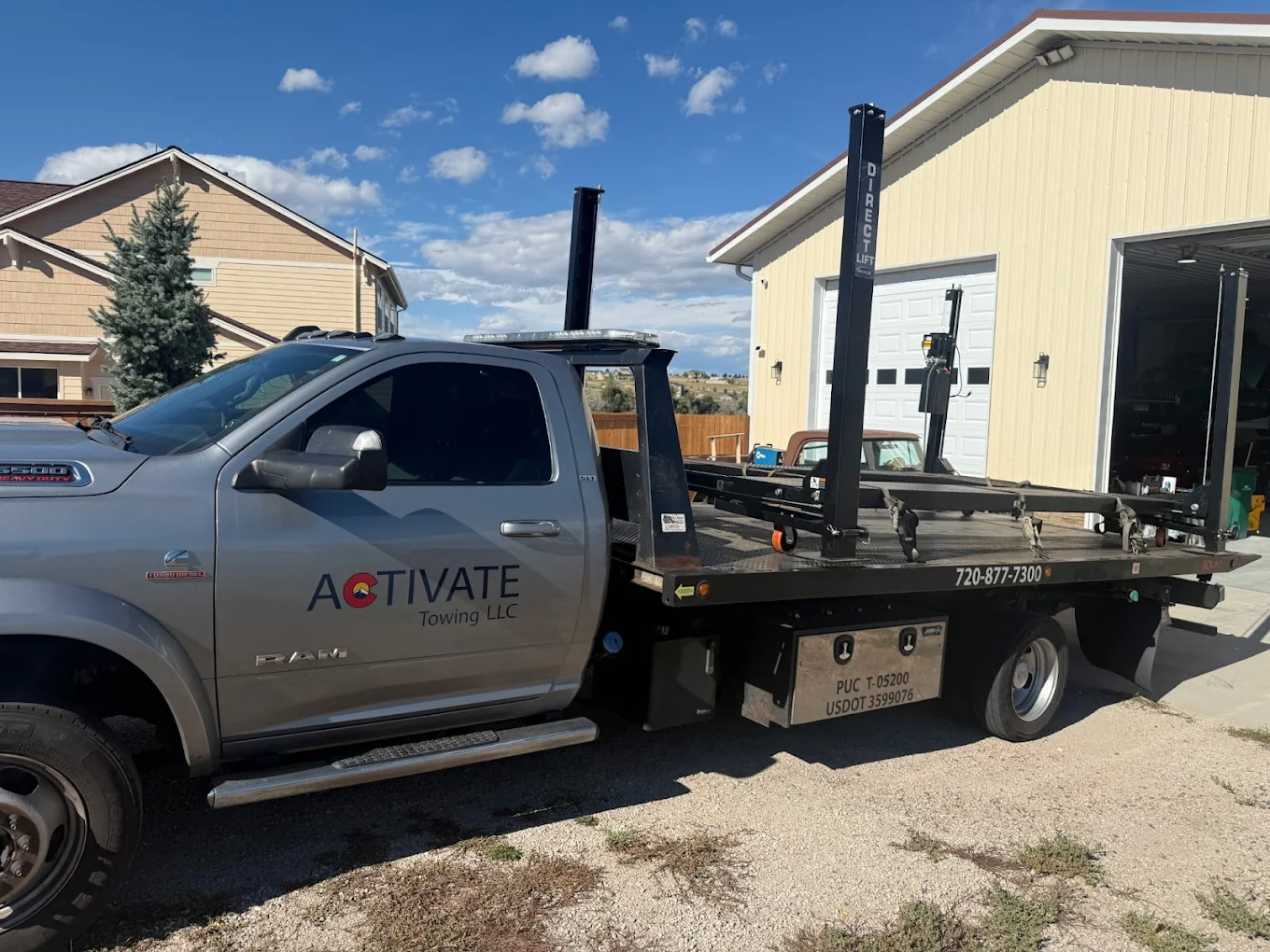
What Makes the Best Collision Recovery Service Reliable?
Most drivers call after the worst has already happened. The flatbed is on scene, but the winch angle looks wrong, the casualty is leaking fluid, and nobody's put out cones. A reliable operator shows up with MUTCD-compliant traffic control, assesses the scene for secondary hazards, and chooses the recovery method that won't add frame damage to an already totaled car.
What Separates a Safe Recovery from a Rushed One
- Scene Assessment: 360° hazard check before any rigging or winching begins
- Traffic Control: Cones, LED flares, and arrow boards per MUTCD standards
- Recovery Method: Winch angle, snatch block, and dolly selection by vehicle position
- Documentation Protocol: Time-stamped photos and itemized invoices for every claim file
Insurers reject claims when the tow invoice lists a single lump sum instead of breaking out base fee, mileage, winch time, and storage. Most operators skip the photo set because it adds three minutes to the job, those three minutes are the difference between a paid claim and a dispute that drags for weeks.
Why Castle Rock Drivers Choose Our Recovery Team
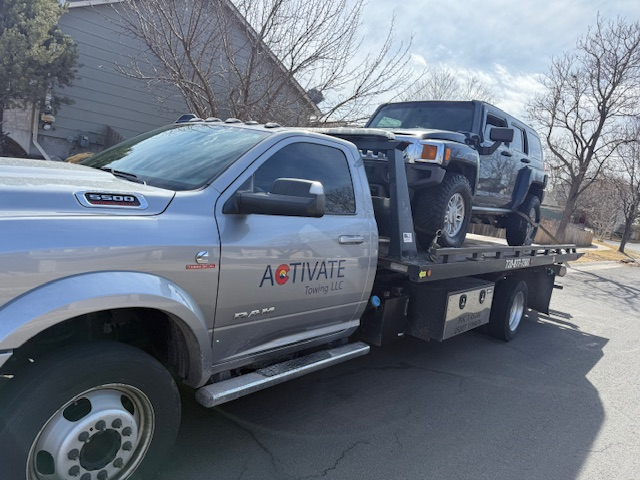
Douglas County accident scenes require coordination with Colorado State Patrol for interstate incidents and Castle Rock Police for local crashes. Our dispatch system routes the closest flatbed or integrated wrecker based on vehicle type, driveline, and scene hazards.
24/7 Dispatch and Response
Average response time under 30 minutes across Castle Rock, Roxborough, and the I-25 corridor. GPS tracking provides real-time ETAs to law enforcement and insured parties.
Colorado PUC Compliance
All non-consensual tows follow Colorado Public Utilities Commission tariffs for base fees, storage, and after-hours charges. Transparent itemized invoicing at every step.
Insurer-Ready Documentation
Four-angle photo sets, time stamps, and chain-of-custody logs meet CCC and adjuster requirements. No callbacks for missing paperwork or unclear damage records.
EV and AWD Handling
OEM towing procedures for Tesla, Rivian, and xDrive vehicles. Flatbed or dolly transport prevents drivetrain damage on all-wheel-drive and hybrid platforms.
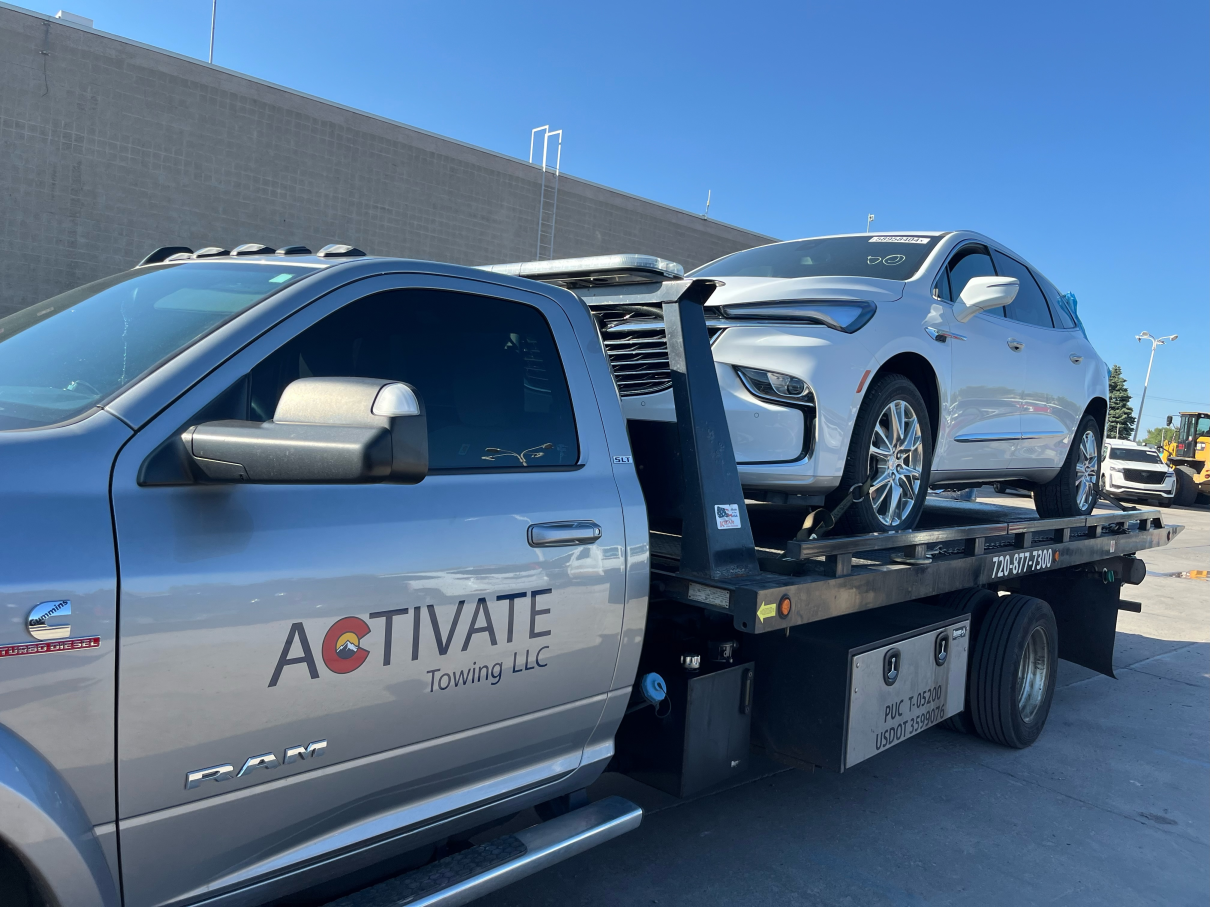
How Accident Recovery and Collision Towing Protects Drivers After a Crash
You're standing on the shoulder of I-25 at mile marker 181, watching your Subaru leak coolant onto the pavement while southbound traffic blurs past at seventy. The first thing a trained operator does is deploy traffic control, not hook the vehicle. Scene safety prevents secondary collisions, and fluid containment keeps CDPHE inspectors from flagging the incident as an environmental spill.
Steps That Keep the Scene Safe and the Claim Clean
- Traffic Incident Management: Cones, LED flares, and high-visibility PPE before any recovery work
- Fluid Containment: Absorbent pads and booms for oil, coolant, and transmission leaks
- Vehicle Stabilization: Chocking, cribbing, and battery disconnect before winching or loading
- Controlled Load Path: Winch angle and snatch block placement to avoid frame twist
Scene safety and proper rigging prevent secondary damage, but they also add time that some drivers resent. The flatbed operator who skips cribbing and traffic control gets you off the shoulder faster, until the adjuster sees suspension damage that wasn't there before the tow, or a secondary collision puts another vehicle into the scene.
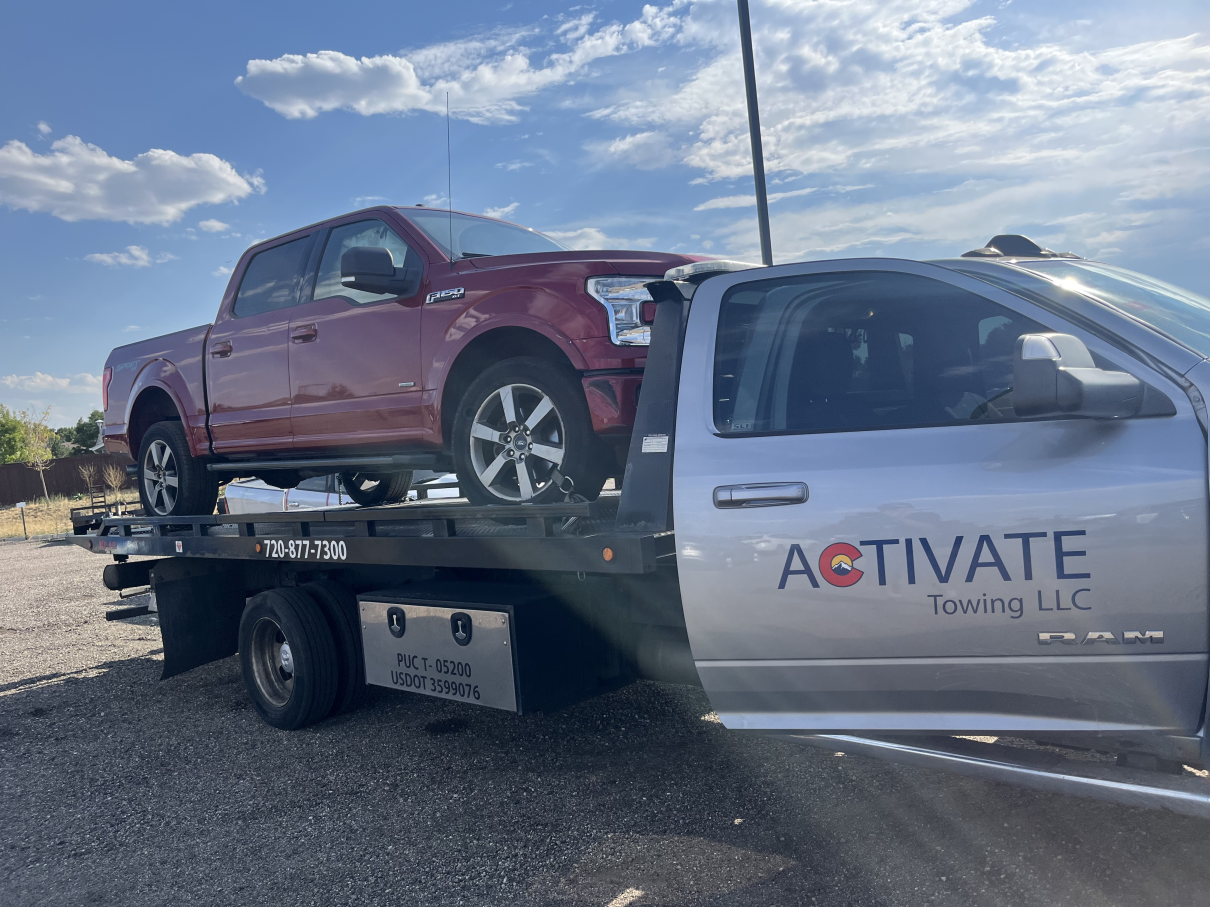
What to Expect During Your First Call
Most drivers call from the roadside with no clear idea of what information dispatch needs. The intake process asks for your exact location, vehicle make and driveline, visible damage, and whether fluids are leaking. That triage determines whether we send a light-duty flatbed , an integrated wrecker, or a team with dollies and a winch kit. If you're dealing with a minor roadside issue rather than collision damage, our roadside assistance team can often resolve the problem on-site.
How Dispatch Routes the Right Equipment
- Location and Hazards: GPS coordinates, lane position, and traffic flow for safe approach
- Vehicle Type: Sedan, SUV, truck, EV, or AWD determines carrier and rigging
- Damage Assessment: Wheel lock, frame contact, or fluid loss affects recovery method
The operator calls five minutes out to confirm scene access, walks the vehicle on arrival, and documents pre-existing damage before any movement. Some drivers expect us to load a car with locked wheels and no dollies, then call back frustrated when the next shop finds transmission damage from dragging it onto the deck.
Serving Castle Rock and Surrounding Areas
Activate Towing serves drivers throughout Castle Rock and the surrounding Douglas County area. Our team regularly responds to collisions along the I-25 corridor, Highway 105 near Castlewood Canyon, and local roads in Roxborough Village and Highlands Ranch. We maintain flexible scheduling and 24/7 dispatch to meet urgent recovery needs across the region.
Service Area
- Frequent response to incidents near the Outlets at Castle Rock and Promenade shopping districts.
- Full coverage across the greater Castle Rock metro area and adjacent Front Range communities.
- Our operators coordinate with Colorado State Patrol and Castle Rock Police on all accident scenes.
Same-day and emergency response available across Castle Rock, with dispatch routing the closest flatbed or wrecker to your location.
Frequently Asked Questions
What happens to personal belongings left inside a vehicle after a collision tow?+
Personal items remain in the vehicle during collision towing and transfer with it to the designated repair shop or storage yard. Securing valuables before the tow prevents loss, though most operators document visible belongings during the initial walkthrough.
Items stay inside the vehicle throughout the recovery and transport process. The tow operator typically notes visible belongings during the initial damage assessment but isn't responsible for cataloging everything. Anything in the cabin, trunk, or cargo area moves with the vehicle to wherever it's being delivered. If you're able to access the vehicle before it's towed, grab medications, electronics, and documents. Once it reaches the body shop or impound lot, you'll need to coordinate with that facility to retrieve anything left behind.
How does Activate Towing handle vehicle stabilization at a collision scene in Castle Rock?+
Stabilization at collision scenes involves securing the damaged vehicle to prevent secondary movement, protecting surrounding property, and preparing for safe transport. The approach varies based on impact severity, vehicle position, and roadway conditions.
Stabilization starts before the tow truck even hooks up. After running through dozens of collision recoveries, the pattern that creates the most risk is assuming a vehicle is stable just because it stopped moving. Impact can compromise suspension, shift weight distribution, or leave a car balanced on debris that settles over time. Activate Towing operators assess wheel position, undercarriage damage, and load balance before applying any lifting force. If the vehicle is resting against a guardrail, wedged between objects, or tilted on uneven ground, we use wheel chocks, stabilizing straps, and sometimes airbags to control the load before the winch engages. Fluid leaks get contained with absorbent pads. Glass and sharp metal edges are flagged to protect both the operator and bystanders during the lift.
Once the vehicle is secured and lifted, Activate Towing transitions to transport mode with the same attention to balance and clearance. If your vehicle is in an unstable position after a crash and you need controlled recovery in Castle Rock, contact Activate Towing for collision response that prioritizes scene safety and vehicle integrity.
Why do Castle Rock drivers choose Activate Towing for collision recovery after an accident?+
Activate Towing handles collision recovery with trained operators who secure damaged vehicles, coordinate with law enforcement, and transport to repair facilities without causing additional damage. Effectiveness depends on immediate scene assessment and proper equipment deployment.
Drivers in Castle Rock choose Activate Towing because collision recovery requires more than just a flatbed and a hook. When a vehicle has been in an accident, the structural integrity is already compromised, and improper lifting or dragging can bend frames, rupture fluid lines, or damage suspension components that survived the initial impact. Activate Towing's operators are trained to assess crash damage before rigging the vehicle, which means they identify weak points, choose anchor locations that won't collapse under tension, and use wheel dollies or skates when a vehicle can't roll on its own power.
What Separates Collision Recovery from Standard Towing:
- Scene Coordination: Operators work alongside emergency responders to clear lanes safely while documenting vehicle position and damage for insurance purposes.
- Damage Mitigation: Undercarriage inspection before rigging prevents further harm, especially when airbags have deployed or fluids are leaking onto pavement.
- Multi-Vehicle Incidents: When more than one car is involved, Activate Towing stages equipment to clear the roadway in sequence without blocking access for ambulances or fire crews.
One thing that consistently catches drivers off guard is how much additional damage can happen during an improper tow. A crumpled front end doesn't mean the rear suspension is stable, and dragging a disabled vehicle onto a flatbed can twist the frame or snap already weakened control arms. If your vehicle has been in a collision and needs recovery in Castle Rock, contact Activate Towing to ensure the transport doesn't compound the repair bill.
Can accident recovery specialists tow a vehicle that's partially submerged or stuck in mud after a Castle Rock crash?+
Recovery specialists can extract vehicles from mud, ditches, or shallow water using winches and stabilization equipment. Success depends on ground conditions, vehicle position, and accessibility for recovery rigs to operate safely.
Extraction from challenging positions is possible when the scene allows safe equipment access. Winches, tow straps, and stabilization boards handle most mud or ditch scenarios common along Castle Rock's rural corridors. Partial submersion in creeks or retention ponds complicates the process, especially if the vehicle shifted during impact. One thing we've learned after pulling dozens of cars from soft ground is that waiting too long lets the chassis settle deeper, which turns a straightforward pull into a multi-hour job. If your vehicle landed somewhere unstable after a collision, describe the exact terrain when you call so the crew arrives with the right rigging.
What should drivers avoid doing immediately after a collision while waiting for recovery specialists?+
Avoid moving the vehicle yourself, leaving the scene unattended, or failing to document damage before towing. These actions can complicate insurance claims and create safety hazards that professional recovery teams are trained to prevent.
The most damaging mistake is attempting to drive a vehicle away from a collision scene when structural or mechanical damage isn't immediately visible. Bent frames, leaking fluids, or compromised steering can turn a short drive into a secondary accident. Another common error is leaving the vehicle unattended to handle other tasks, which opens the door to theft, vandalism, or disputed liability if someone else disturbs the scene. Failing to photograph damage from multiple angles before the vehicle is moved can gut an insurance claim later, since adjusters rely heavily on scene documentation to validate coverage. One thing that catches people off guard is how quickly emergency responders will demand a vehicle be cleared from travel lanes, which creates pressure to make hasty decisions about towing without verifying the provider's credentials or destination.
If your vehicle is blocking traffic or poses a hazard, let trained recovery specialists handle stabilization and transport rather than rushing the process. Capture photos of all visible damage, fluid leaks, and the vehicle's position before anyone touches it, and confirm the tow destination with your insurer before the truck leaves the scene.
Related Castle Rock, CO service pages.
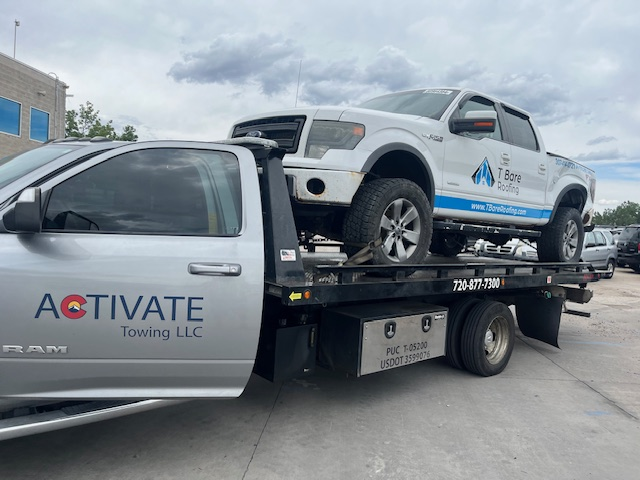
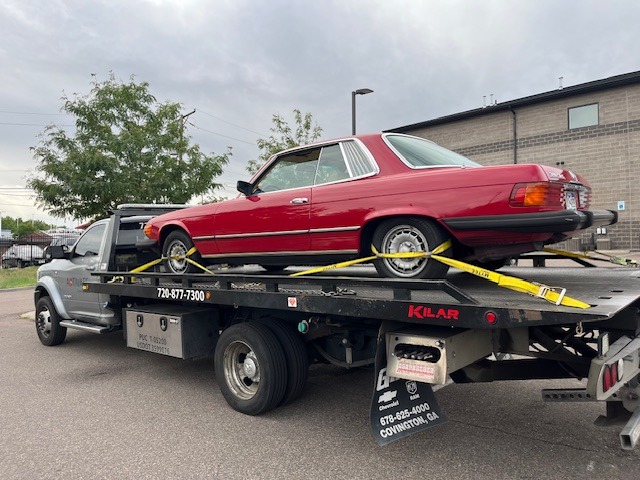
Need Collision Recovery in Castle Rock Right Now?
Activate Towing dispatches flatbeds and integrated wreckers 24/7 across Douglas County. Every recovery includes Colorado PUC-compliant invoicing, insurer-ready photo documentation, and coordination with law enforcement. Call now for immediate response, or text your location for an ETA.