Towing in Parker for Breakdowns, Accidents, and Roadside Emergencies
Activate Towing provides light-duty, medium-duty, and flatbed towing in Parker, Colorado, with local response across Parker Road, E-470, and Highway 83. We handle accident recovery, lockouts, jumpstarts, and tire changes using proper tie-down techniques for AWD, lowered, and luxury vehicles.
- Flatbed option: Protects AWD and low-clearance vehicles in transport
- Parker-based response: Local knowledge of E-470, Parker Road, and Elizabeth routes
- Roadside solutions: Jumpstarts, tire changes, and lockouts handled on site
- Medium-duty capability: Equipment for vehicles beyond standard passenger cars
Trusted by drivers across Douglas County
Live reviews straight from Google.
What Kind of Towing Help Do You Need?
Most calls start with someone assuming they need a full tow when the actual problem is smaller. A dead battery, flat tire, or lockout usually gets solved on site in Parker without loading the vehicle. A tow is only necessary when the fix cannot happen where you are stranded.
I need a tow
Safe vehicle transport using flatbed and wheel-lift equipment matched to your drivetrain and clearance requirements.
Get a Tow QuoteMy car will not start
On-site battery testing and jump-start service, which resolves most dead-battery calls without a tow to a shop.
Jump Start HelpI have a flat tire
Tire changes at your location, using proper jack points and torque specifications to get you moving again.
Tire Change HelpI am locked out
Lockout assistance for drivers in Parker, opening your vehicle without damage using professional entry tools.
Lockout HelpI need accident recovery
Collision scene work with winch rigging, stabilization, and documentation your insurer and repair shop can use.
Recovery Help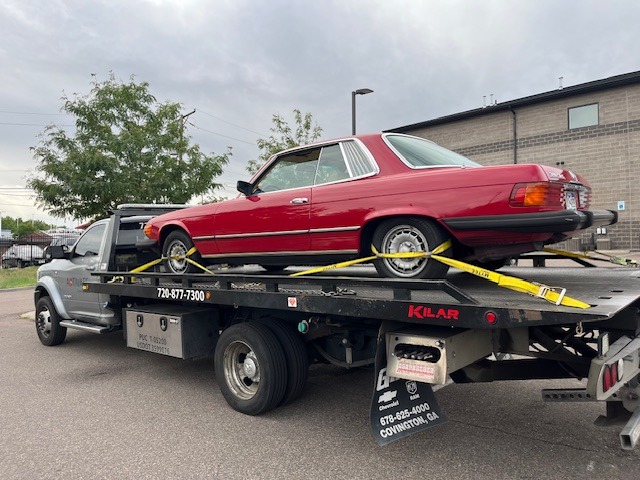
Towing Options That Match Vehicle Size and Transport Needs
A wheel-lift applied to an AWD or low-clearance vehicle causes drivetrain damage that surfaces weeks after the hook-up, long after the customer has paid and the operator has left. Put an AWD Subaru on a wheel-lift with the rear wheels down and the center differential spins under load, overheating the transfer case before the driver notices anything at all.
That failure is quiet. The vehicle gets hooked, the customer signs, and the tow finishes with no visible incident. Three weeks later the AWD system throws a fault code because the driveline turned under tow for eleven miles at highway speed, and nobody connects the two events. Matching the equipment to the drivetrain on the first call is what prevents that bill.
The right method depends on the vehicle, manufacturer guidance, location, and roadside condition. Read more about light-duty towing, flatbed towing, and medium-duty towing, or call to discuss your vehicle before dispatch.
Know Your Towing Price Before We Head Your Way
Activate Towing explains the expected service, pickup location, destination, vehicle details, and pricing before dispatch so you can decide what works for your situation.
Local Tow. Within 5 miles
One price. Hook-up, mileage, and drop-off included.
- Flatbed loading
- AWD, 4WD, and EV ready
- Quote confirmed before dispatch
- Card, tap, or cash accepted on site
Longer Distance Tow. Over 5 miles
Hook-up fee plus per-mile. Route confirmed before dispatch.
- Route confirmed up front
- Cross-county and metro Denver
- SMS updates on progress
- Itemized receipts when available
Your quote is discussed before dispatch based on your location, vehicle, destination, and requested service.
How Roadside Fixes Solve Small Breakdowns Before They Become Tows
If you have ever stood next to a dead car in a Parker parking lot, called for a tow, and then found out the battery only needed a jump, you already know the cost difference between roadside assistance and a full flatbed transport. Most breakdowns that feel like tow-truck emergencies are five-minute fixes when the right tools show up on scene.
- Battery jumpstart: A portable pack restores the 12V system on the spot, after a load test confirms the actual failure.
- Tire swap: Your spare mounted roadside in about fifteen minutes, once a gauge reading rules out a simple refill.
- Lockout access: Professional entry tools open the doors without damage or glass breakage risk.
- Fuel delivery: Two gallons delivered gets the vehicle to the nearest station safely.
- Winch-out: For vehicles stuck in mud, snow, ditches, or off a driveway edge.
The failure happens when an operator shows up without diagnostic tools and defaults to loading the vehicle, because loading is what the truck is built for. Diagnosing first is what keeps most Parker calls from turning into a longer, costlier trip.
Service Coverage Built Around Parker Road and E-470 Access
Activate Towing responds across Parker, Colorado, with dispatch built around the Parker Road corridor near Mainstreet and Lincoln Avenue. Coverage runs through Parker neighborhoods including Stonegate, Stroh Ranch, The Pinery, Canterberry Crossing, and Clarke Farms, plus the E-470 and Highway 83 on-ramps drivers actually break down on.
- Response centered on Parker Road, Lincoln Avenue, E-470, and Highway 83.
- Close to Salisbury Equestrian Park, Parker Adventist Hospital, and the Mainstreet shopping district.
- Serves Stonegate, Stroh Ranch, The Pinery, Canterberry Crossing, and Clarke Farms.
- Handles light-duty, medium-duty, and flatbed towing across the Parker community.
See every Parker towing and roadside page
Not sure whether you are within the service area? Call or text your location for a clear answer.
When you need more than a standard tow.
After a collision, when a vehicle will not roll, or when a car needs to move without driving, the safest option is a flatbed with a plan. Careful loading, clear communication, one operator start to finish.
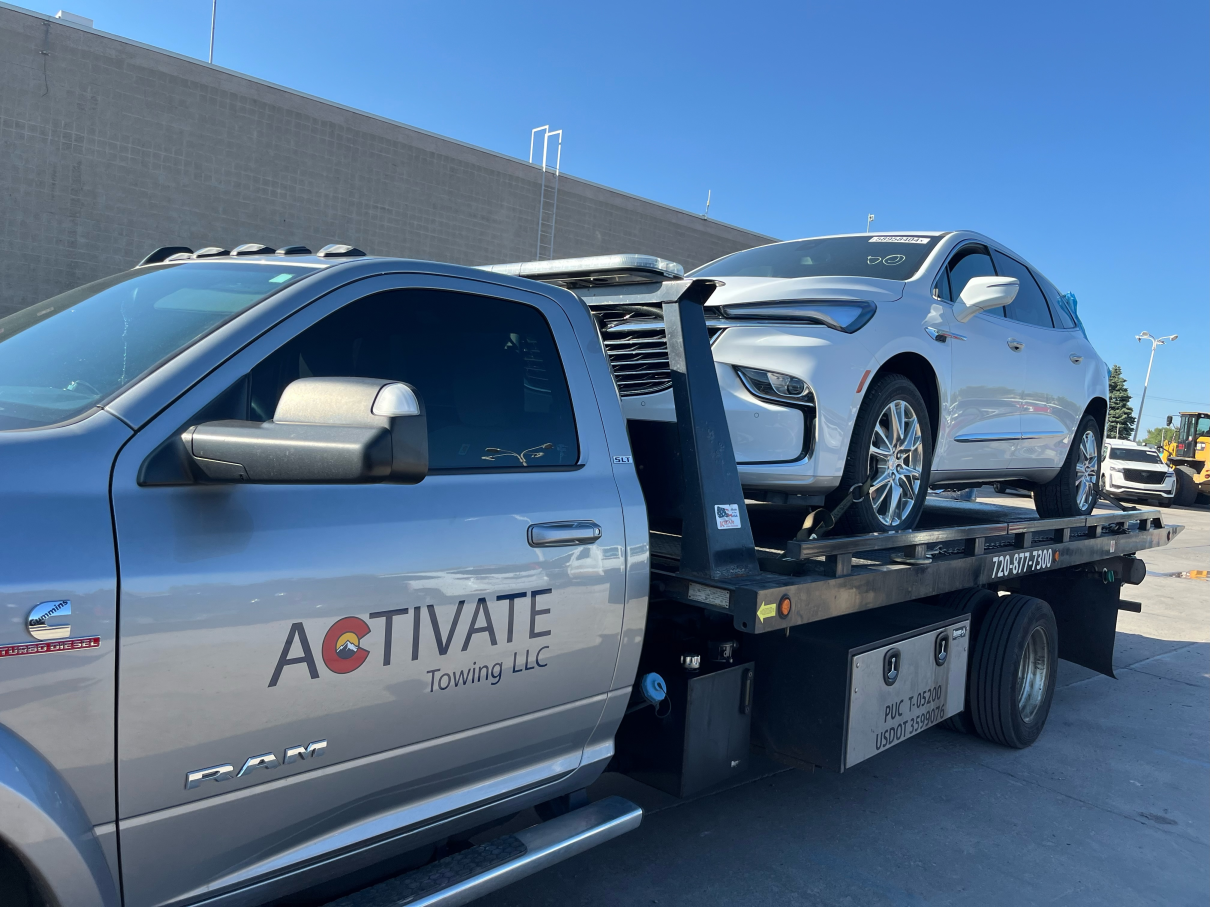
Careful recovery once the scene is cleared.
Once officers release your vehicle, we load it on a flatbed, protect what is still intact, and deliver to the body shop or dealership you choose. Itemized paperwork so insurance can process the claim.
- Collision recovery: Scene stabilization with proper rigging and winch systems once officers clear the vehicle.
- Body shop delivery: Direct drop-off at Caliber, Service King, or your preferred repair facility.
- Insurance paperwork: Itemized receipts your adjuster can process without callbacks.
- Work van and fleet: Disabled service vehicles and small fleet units after incidents.
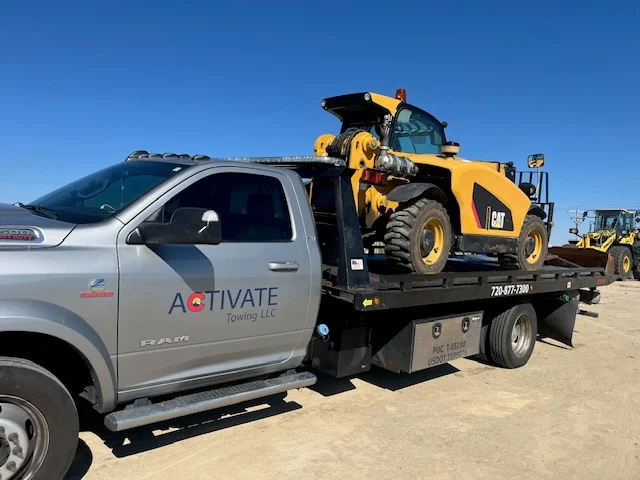
Flatbed transport for cars that need to move without driving.
Blown motor, seized transmission, project build, or a classic that has not run in years. A flatbed keeps all four wheels off the ground, so nothing drags and no drivetrain damage on the way to the shop.
- Light-duty towing: Sedans, coupes, and compact SUVs moved without undercarriage or drivetrain damage.
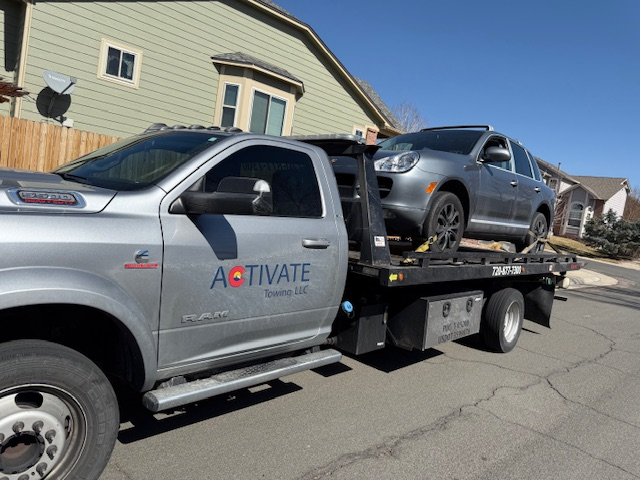
- Flatbed transport: Four-point tie-downs and soft straps for AWD, low-clearance, and luxury vehicles.
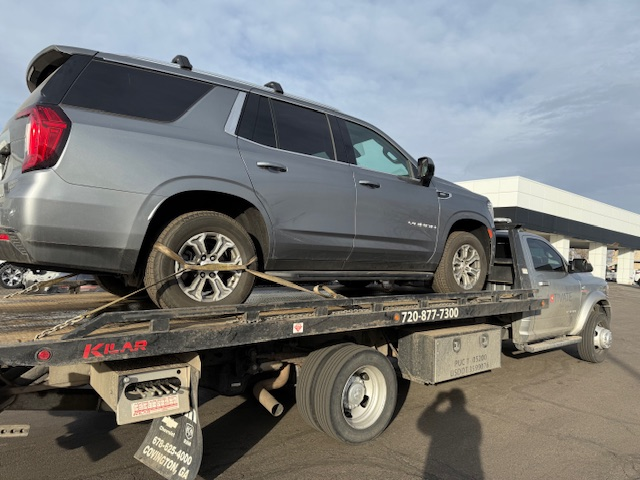
- Medium-duty towing: Larger SUVs, work vans, and box trucks within capacity.
- Junk car pickup: Non-running vehicles removed from Parker properties, with title paperwork handled.
Why Parker and Elizabeth Drivers Call Activate Towing
Activate Towing is built for drivers who want a clear answer, careful service, and a local towing company that understands the roads and roadside situations around Parker, Elizabeth, and nearby Colorado communities.
- Direct Communication With a Local Operator
- Flatbed Towing for Vehicles That Need Careful Transport
- Roadside Help for Breakdowns, Lockouts, and Flat Tires
- Clear Quotes Before Dispatch
- Familiarity With Douglas and Elbert County Roads
- Practical Support for Towing, Recovery, and Vehicle Transport
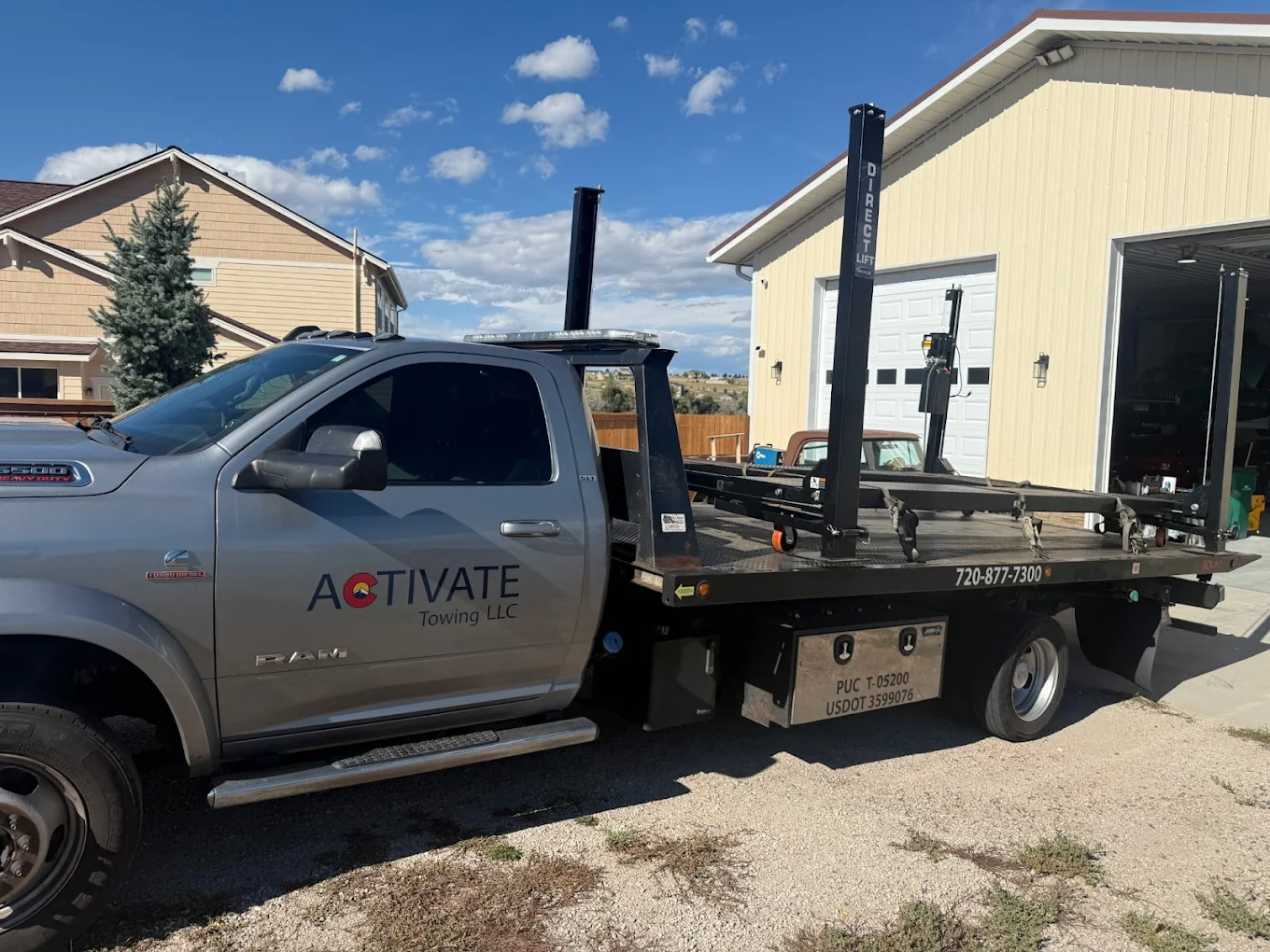
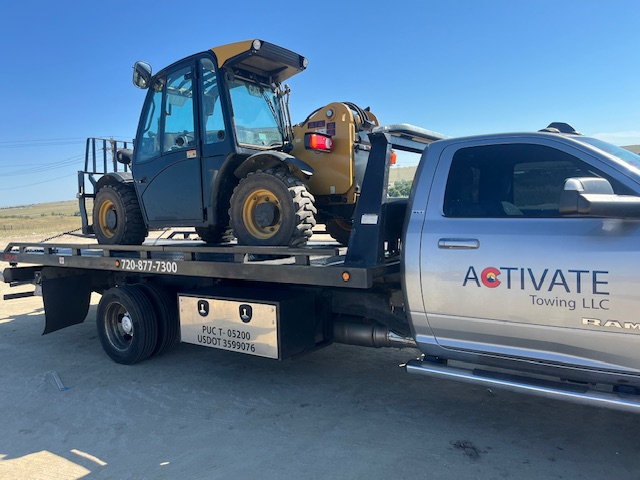
On the road with Activate
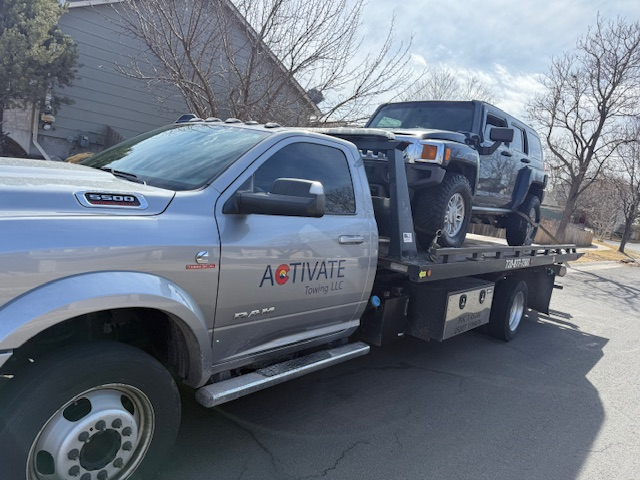
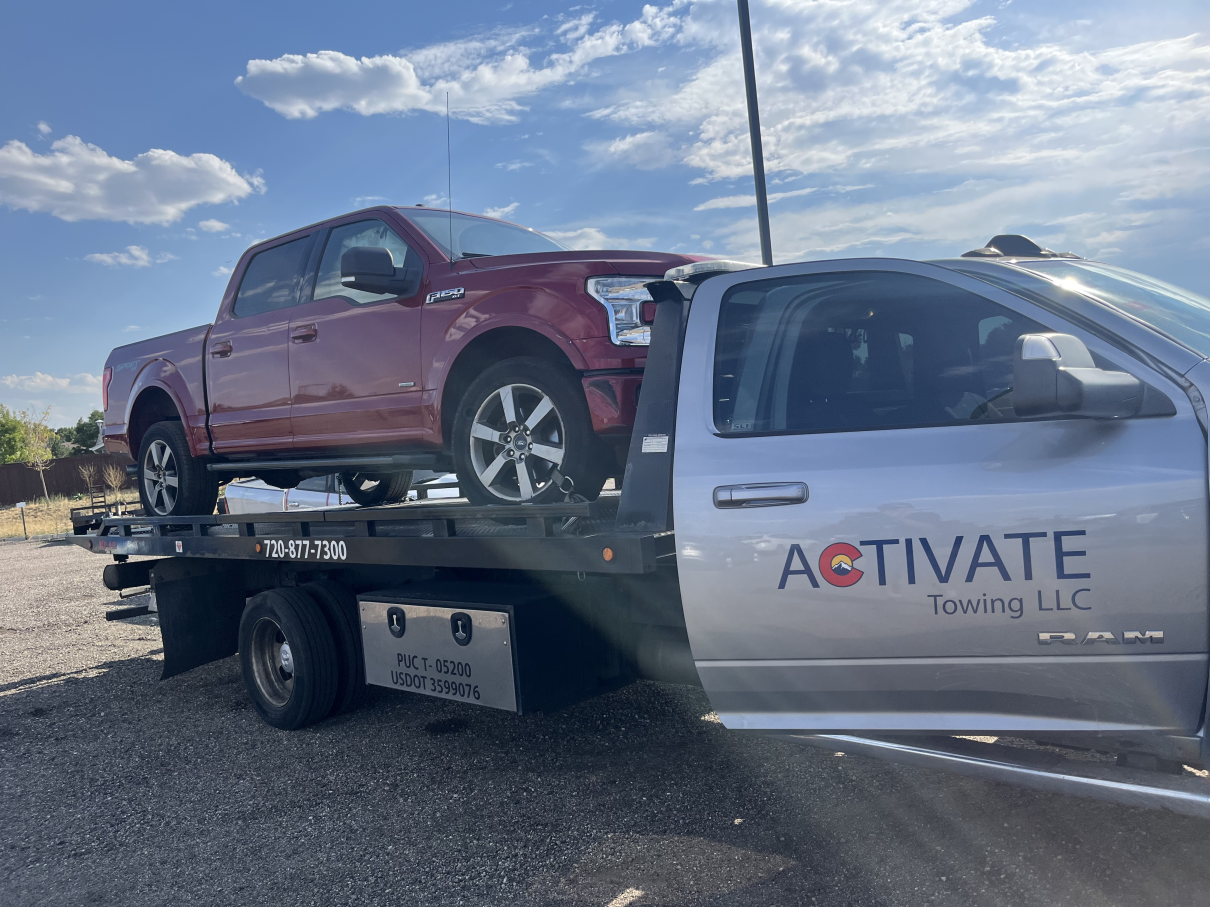
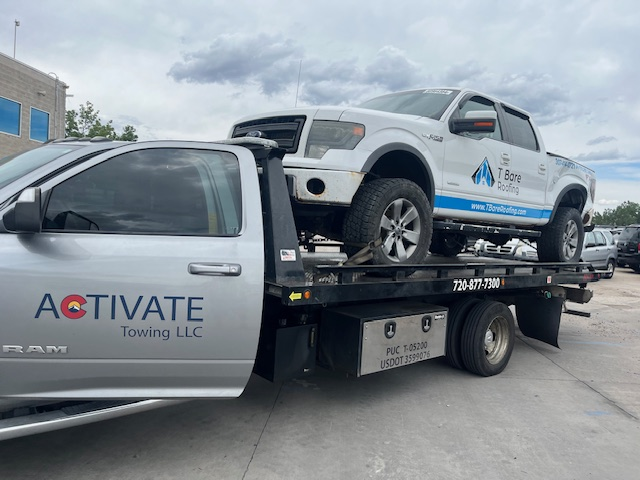
Real jobs, real customers. Hover to pause.
Towing and Roadside Assistance Questions
How does Activate Towing handle towing in Parker when a vehicle sits on private property after an accident?+
Activate Towing coordinates with property owners and insurance adjusters to remove accident vehicles from private lots, driveways, and business parking areas. Timing depends on claim approval and whether the owner authorizes immediate removal or prefers to wait for adjuster photos.
We work directly with Parker property managers when a damaged car blocks a driveway or sits in a business lot after a collision. Insurance adjusters often need seventy-two hours to photograph the scene before authorizing removal. If the vehicle owner signs a release, we can move it to a secure yard the same day. Flatbed transport prevents further frame damage during the move, and most private-property removals happen within four hours of approval.
What does Activate Towing check before recommending flatbed transport instead of wheel-lift towing in Parker?+
We evaluate drivetrain type, ground clearance, and undercarriage damage before selecting a transport method. AWD vehicles and low-clearance sports cars require a flatbed to prevent transmission or body damage during the tow.
Drivetrain configuration decides most of it. AWD and 4WD systems lock the driveline when rear wheels spin during a wheel-lift tow, which overheats the transfer case in under three miles. Front-wheel-drive sedans tolerate a wheel-lift if the rear axle rolls freely, but anything with a locked differential or active torque vectoring needs four wheels off the pavement.
Ground clearance matters just as much. A Corvette with a two-inch front splitter scrapes on most wheel-lift cradles, and a modified truck with aftermarket suspension sits too high for the lift arm to engage safely. At pickup we run a three-point inspection: check the owner's manual for drivetrain type, measure front-end clearance with a tape if the vehicle sits low, and look under the car for fresh fluid leaks or bent control arms that signal hidden frame damage.
Accident scenes add one more variable. If the collision bent the rear subframe or the alignment looks off by more than a few degrees, the flatbed prevents further stress on already-compromised suspension mounts. A wheel-lift works for a simple dead-battery call, but anything involving a crash, a performance car, or all-wheel drive defaults to flatbed in Parker.
Why do some towing companies in Parker refuse to hook up a car that still runs?+
Operators decline running vehicles when the owner requests a tow for convenience rather than mechanical failure, because insurance authorization and liability coverage apply only to disabled vehicles. Non-breakdown transport requires different paperwork.
A car that starts, shifts, and brakes does not qualify as disabled under most roadside assistance policies. Insurance carriers authorize towing in Parker when a vehicle cannot move safely under its own power. If the engine turns over and the transmission engages, the claim gets flagged during callback verification, and an operator who hooks a functional car without documented failure risks a rejected invoice that leaves the driver responsible for the full bill.
- Owner fatigue or anxiety:
- The driver feels unsafe continuing, but the car shows no mechanical fault, so the policy excludes coverage.
- Convenience relocation:
- The vehicle is parked legally and the owner simply wants it moved to another lot, with no breakdown behind the request.
- Pre-repair transport:
- The owner schedules a service appointment and requests a tow before any component fails, which falls outside emergency assistance terms.
Operators in the Parker area ask three questions before connecting the hook: does it start, does it shift, does it stop. If all three answers are yes, the job becomes a paid transport rather than a covered tow. Drivers who need a running car moved should ask for a non-emergency transport quote instead of filing a breakdown claim.
Why do some providers refuse to move a vehicle that still has air in all four tires?+
Towing in Parker requires proof of mechanical failure or ownership authorization before a drivable vehicle gets moved. Air pressure alone does not prove a car needs transport, so operators verify that the starter motor fails, the transmission locks, or the owner holds title before hooking chains. A sedan with inflated tires and no visible damage raises questions about consent and legal standing, and a truck parked on a private lot with no keys present creates liability exposure that exceeds the tow fee. The refusal protects both parties from disputes that surface days later.
Why do operators photograph all four sides of a vehicle before loading it onto the flatbed?+
Pre-load documentation protects both the operator and the vehicle owner by establishing baseline condition before transport. Photos capture existing damage, which prevents false claims and clarifies liability when scratches or dents appear after delivery.
Insurance adjusters reject damage claims without timestamped proof of when a scratch appeared. Four-angle photography captures door dings, paint chips, undercarriage rust, and glass condition before the vehicle moves, and the same photos get taken at the unloading site. If a cracked bumper existed before pickup, the photos prove it. If a new dent appears in transit, the comparison shows exactly when liability attached. This matters most for accident recovery and junk car pickup, where vehicles already carry collision damage that owners may not remember clearly days later.
The two minutes spent photographing a vehicle before loading saves hours of claim review and potential legal cost later.
What happens when a tow truck arrives and the driver decides the vehicle cannot be moved safely that day?+
Drivers refuse transport when frame damage, fluid leaks, or unsecured cargo create liability during movement. The operator documents the condition, explains the risk, and schedules a specialized flatbed or recovery unit instead.
Frame rail bends change everything. A sedan that looks intact after a side-impact collision may have structural damage that stays invisible until a wheel-lift applies tension. Drivers trained in accident recovery inspect suspension mounts, check for transmission fluid pooling under the chassis, and look for cargo shifting inside before committing to a hook.
- Visible fluid trail:
- Brake fluid or fuel dripping during movement creates fire risk and road contamination citations.
- Unsecured load inside:
- Loose tools or cargo shifting in transit can puncture fuel tanks or damage hydraulic lines mid-route.
- Wheel bearing separation:
- A hub that wobbles or grinds under hand pressure will fail completely once weight transfers to the tow dolly.
- Missing lug nuts:
- Three or fewer lugs remaining on any wheel disqualifies standard wheel-lift towing and requires flatbed scheduling.
The operator photographs the refusal condition, provides a written explanation, and arranges a flatbed or heavy-duty unit equipped for compromised vehicles. Most refusals resolve within four hours once the correct equipment arrives. Forcing a damaged car onto the wrong platform turns a recoverable situation into a total loss claim.
Why do towing companies ask for the vehicle registration before moving a car off the highway?+
Registration confirms legal ownership and limits liability when a vehicle gets moved from a public road. Operators who hook a car without confirming ownership risk moving stolen property or stepping into a custody dispute. Parker sits near E-470, where abandoned and disputed vehicles turn up regularly, so the five seconds spent photographing a registration card removes most of the legal risk before the winch ever spools.
Need a Tow or Roadside Help Right Now?
Call Activate Towing for a clear quote, or text your location so we can understand what happened and help you choose the right next step.
720-877-7300